Authentic Italian Catering  |  Bradford, PA  |  +1 (814) 558-7972  /  +1 (582) 433-1404  /  +1 (814) 558-8787

Category: Blog

  • Holiday Party Catering: 7 Brilliant Tips to Feed a Crowd

    Holiday Party Catering: 7 Brilliant Tips to Feed a Crowd

    Holiday party catering is the process of hiring a professional food service to handle meals for seasonal celebrations — from office Christmas parties and end-of-year gatherings to family holiday dinners and community events. Done right, it removes the stress of cooking for a crowd and lets you actually enjoy the occasion. Done wrong, it leaves guests waiting, food running cold, and hosts scrambling.

    This guide covers everything you need to know to plan holiday party catering that runs smoothly from the first call to the last plate.

    What Is Holiday Party Catering and Why Does It Matter?

    Holiday party catering means outsourcing your event food to a professional who handles preparation, delivery, and often setup so you do not have to. It is one of the highest-value decisions you can make for any seasonal gathering because the food sets the tone for the entire event.

    According to National Restaurant Association research, catering for holiday events represents one of the most concentrated demand surges in the foodservice industry.

    For hosts in smaller markets like Bradford, Kane, Smethport, Olean, and Wellsville, working with a local scratch-made caterer during the holidays is often far more reliable than chain options that become overwhelmed during peak season.

    Holiday party catering also solves a problem that home cooking rarely can for gatherings over 20 people: consistency across every plate when you are feeding 40 or 80 guests at once. A professional caterer manages portion control, temperature holding, and dietary accommodations at scale, which means the last guest through the line gets the same quality as the first. For an event where the impression you leave on colleagues, clients, or family members matters, that consistency is often worth more than any individual dish on the menu.

    When Should You Book Holiday Party Catering?

    Timing is the single most important factor in holiday party catering. For a full planning checklist, Eventbrite’s guide on how to plan a holiday party covers the complete timeline from venue to catering booking.

    The best caterers in any local market book out 4 to 6 weeks during peak holiday season. October and November are the busiest booking months. If your party is in December, you should be placing your catering call in October.

    For office holiday parties and corporate end-of-year events, HR teams and office managers should lock in catering by mid-October at the absolute latest. Any later and you risk your first-choice caterer being unavailable.

    For family gatherings and smaller celebrations, 2 to 3 weeks lead time is usually workable. But the earlier you book, the more flexibility you have on menu customization and delivery timing.

    What Are the Best Foods for Holiday Party Catering?

    The best holiday party catering menus share 3 qualities: they hold temperature well, satisfy a wide range of guests, and feel celebratory without requiring complicated logistics.
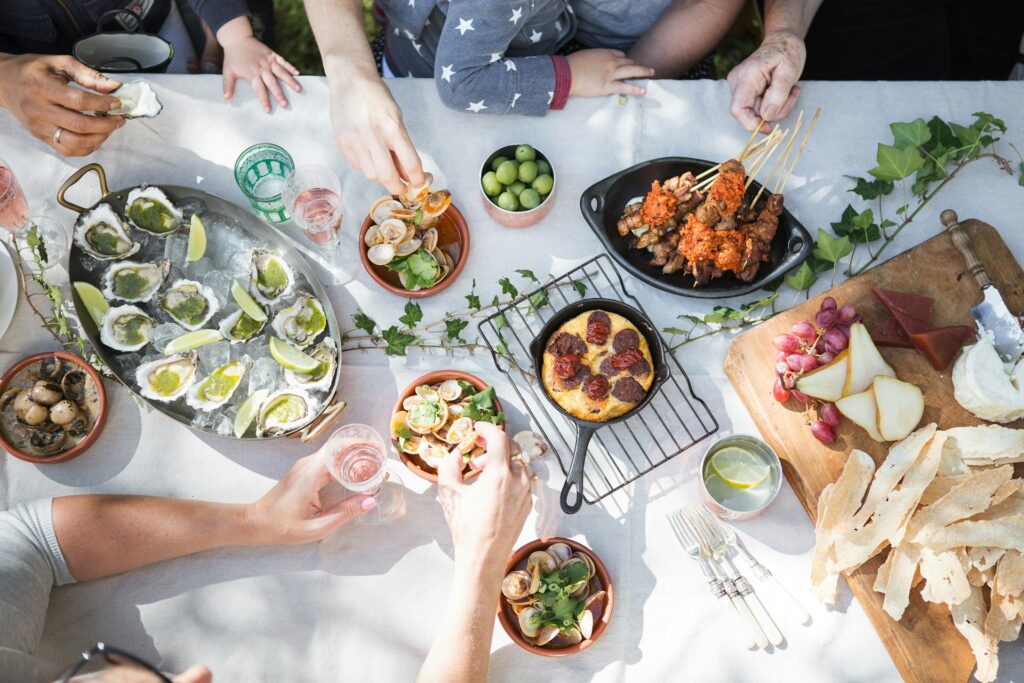
    Holiday Party Catering

    Italian food is one of the strongest choices for holiday catering because it delivers on all 3. Baked pasta dishes, braised proteins, and hearty sides hold heat better than most cuisines, scale from 20 to 200 people without quality loss, and carry the warmth and abundance the season calls for.

    Proven performers for holiday party catering menus include baked ziti, penne with marinara or meat sauce, chicken masala, meatballs, Italian sausage with peppers and onions, garlic bread, Caesar salad, and roasted vegetables. To see current tray options and pricing, view the Italian holiday catering menu.

    A family-style Italian spread — where shared platters come directly to the table — creates exactly the kind of communal warmth that makes a holiday party memorable.

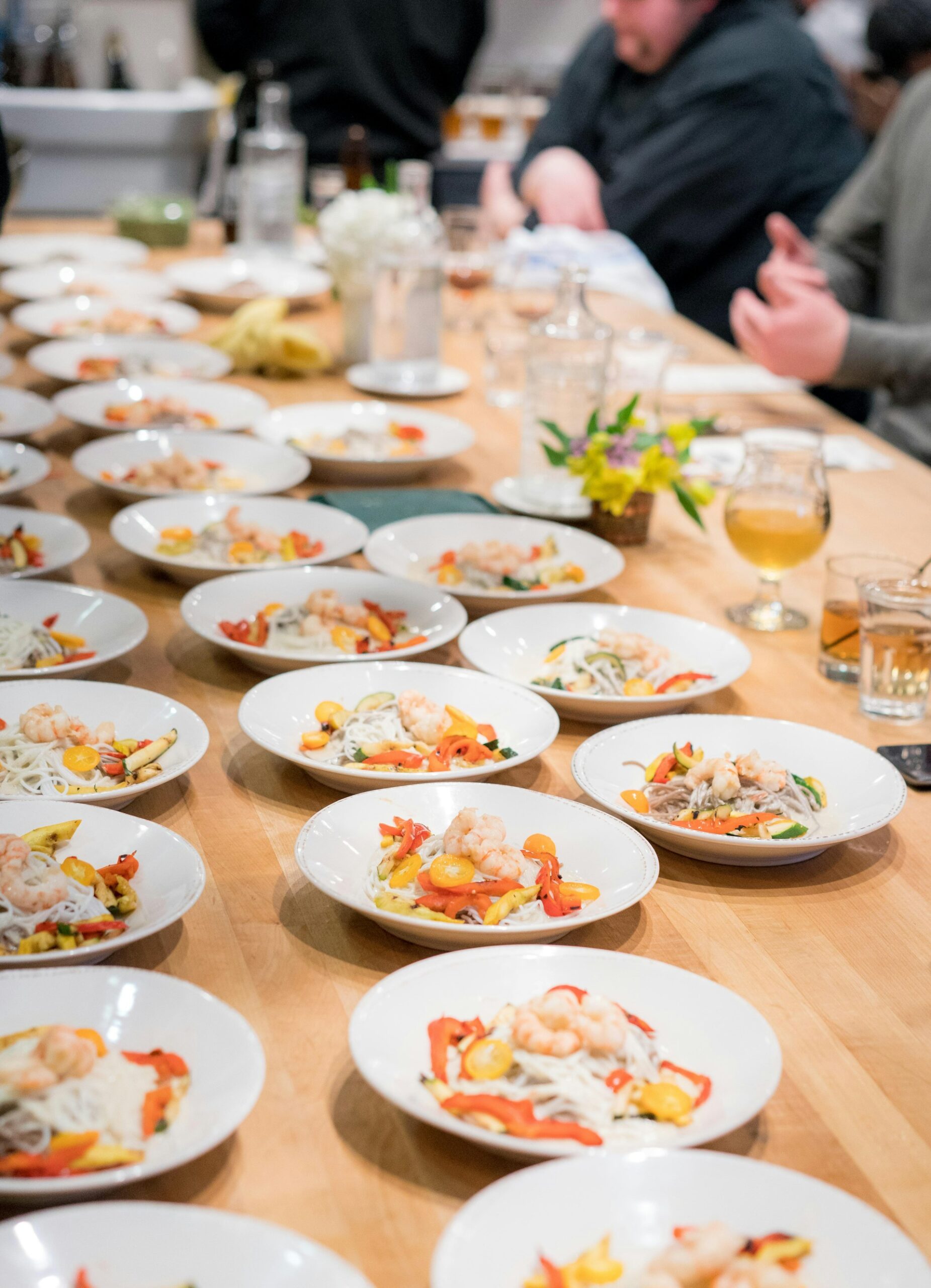
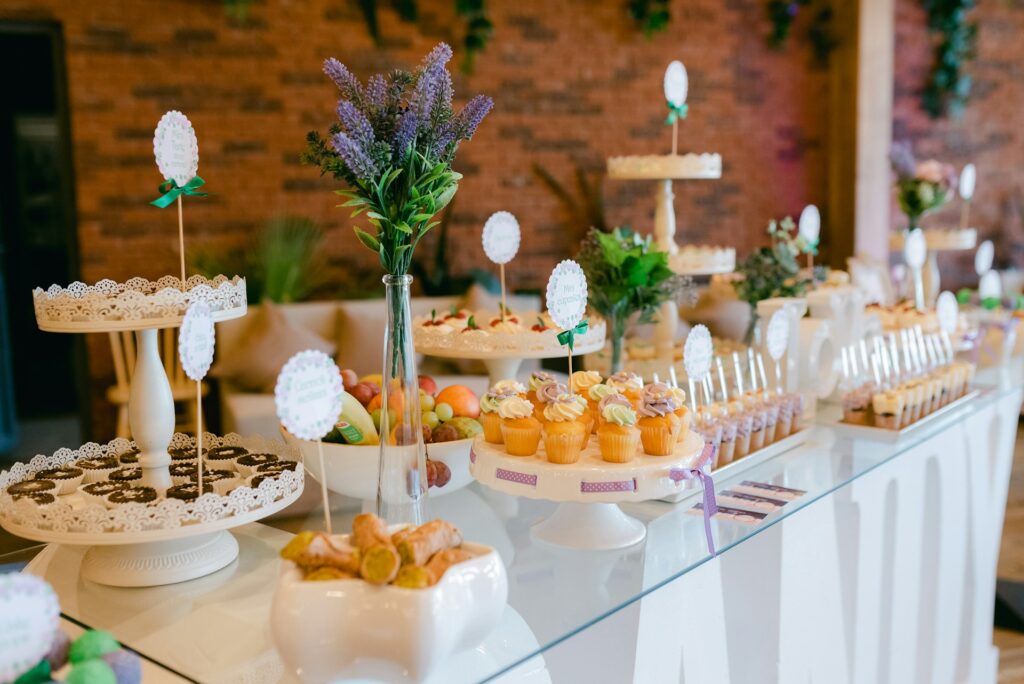
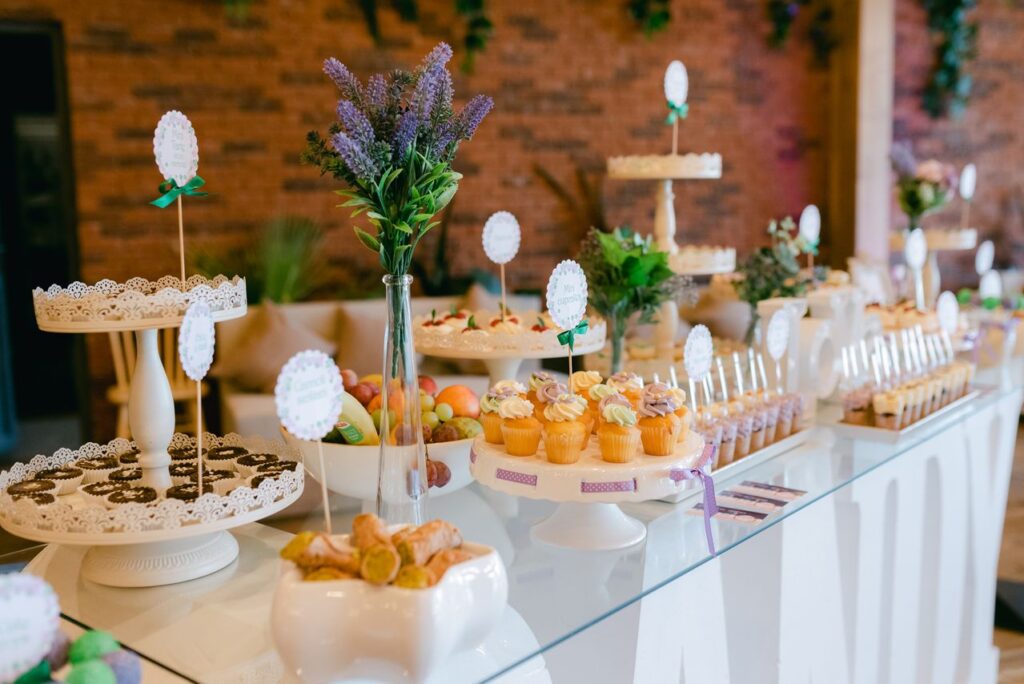
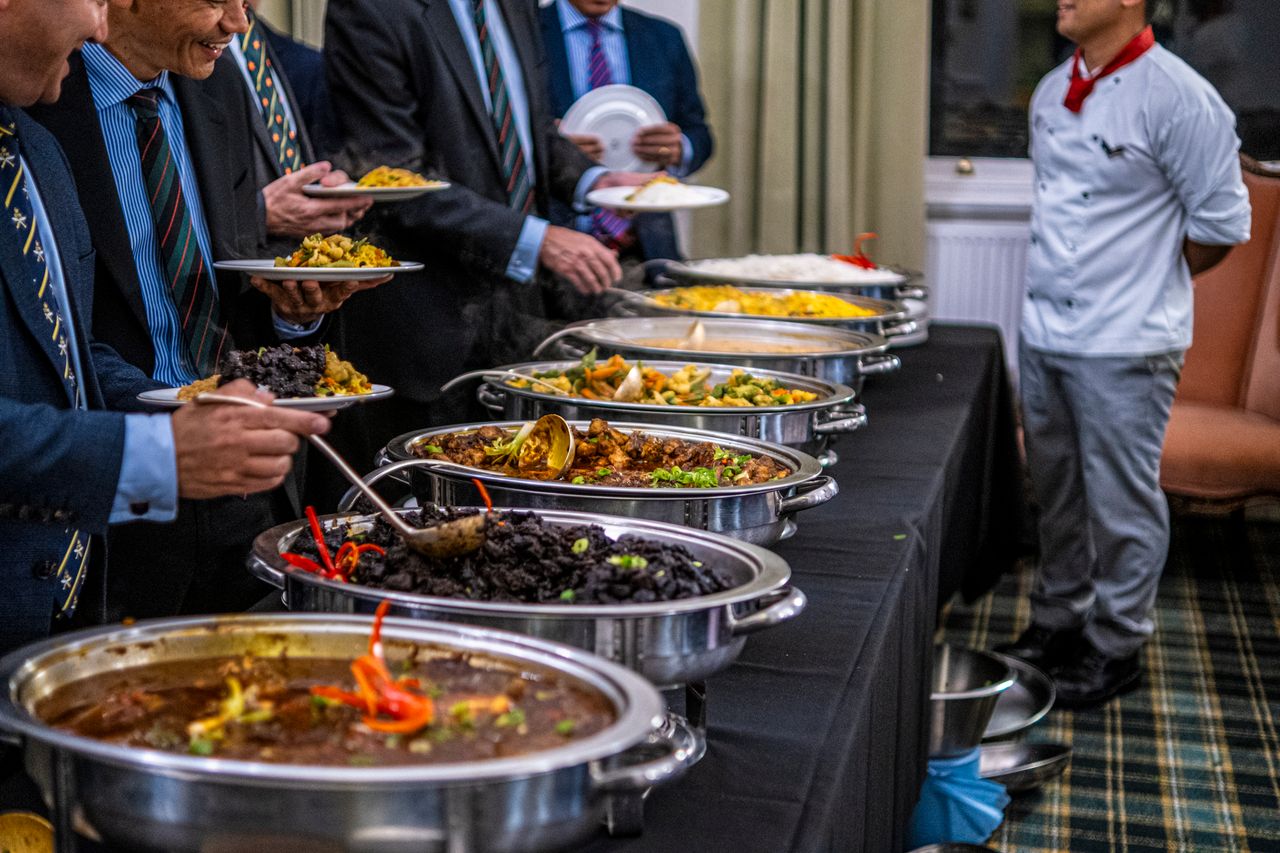
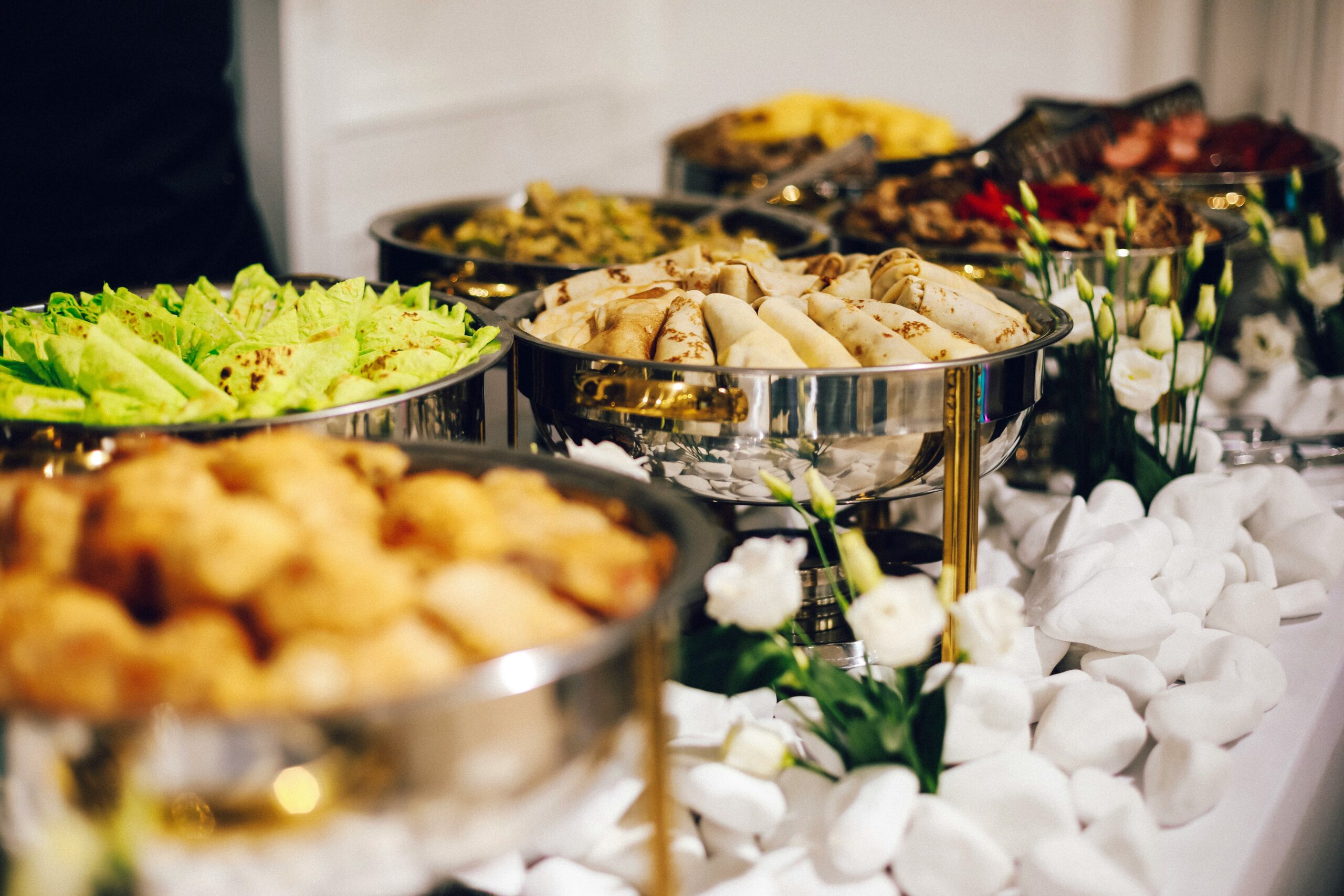
    Presentation matters as much as the food itself at a holiday party. A full Italian spread laid out in chafing dishes with labeled trays, garnished platters, and a dessert station at the end of the table creates a visual impression that signals effort and care to every guest who walks through the door. This is one of the underrated advantages of professional holiday party catering over potluck or self-catered events — the setup looks intentional, which changes how guests experience the food before they even taste it.

    Food CategoryBest Holiday OptionsWhy It Works
    Pasta dishesBaked ziti, penne marinara, meat sauce pastaHolds heat, scales well, crowd pleaser
    ProteinsChicken masala, meatballs, Italian sausageRich, satisfying, feeds large groups
    SidesRoasted vegetables, Caesar saladBalances heavier mains
    BreadGarlic bread, Italian rollsEssential for Italian holiday spreads
    DessertTiramisu, cannoliCelebratory, easy to portion

    How Much Does Holiday Party Catering Cost?

    Holiday party catering costs depend on your headcount, service style, and menu complexity. According to Cvent, event catering typically ranges from $15 to $150 per person depending on these variables.

    For tray-based holiday catering, a half tray feeds 50 to 60 people and typically runs $110 to $120 for pasta or protein dishes. A full tray feeding 100 to 150 people runs $200 to $220.

    For per-person holiday party catering, budget $20 to $40 per person for drop-off service with a full Italian spread. Full-service holiday catering with on-site staff runs $45 to $85 per person depending on event complexity.

    Service StyleCost Per PersonBest For
    Drop-off tray catering$15 to $30Casual office parties, family gatherings
    Per-person drop-off$20 to $40Mid-size holiday events
    Full-service catering$45 to $85Formal holiday dinners, corporate events

    The biggest cost lever is headcount. Lock in an accurate number before you call — most caterers build pricing around your confirmed guest count, and changes close to the event often carry fees.

    7 Brilliant Tips for Planning Holiday Party Catering

    These 7 tips separate a holiday catering experience that guests rave about from one that just fills plates.

    Tip 1: Book in October. The best local caterers are fully booked by mid-November. October is your window. Do not wait until the holiday pressure hits.

    Tip 2: Order 10% more than your headcount. Holiday parties always attract a few extra guests. Build a buffer into your order and you will never run short.

    Tip 3: Choose food that holds heat. Holiday parties rarely run on a tight schedule. Baked pasta, braised proteins, and hearty Italian dishes hold their quality at serving temperature far better than delicate or lighter fare.

    Tip 4: Confirm dietary restrictions early. Send a quick message to attendees 2 weeks out and ask about dietary needs. Italian catering accommodates vegetarian, gluten-free, and most common restrictions easily — but your caterer needs to know in advance.

    Tip 5: Ask about setup and serving equipment. Not all holiday party catering includes chafing dishes, serving utensils, and warming trays. Confirm what is included before you finalize so there are no surprises on the day.

    Tip 6: Simplify your menu. A focused menu of 2 proteins, 2 pastas, a salad, and bread outperforms a sprawling menu of 10 dishes. Fewer choices means better execution and less food waste.

    Tip 7: Choose local over chain. A local scratch-made caterer who knows your community delivers better food and better service during the holidays than a chain operation handling hundreds of orders simultaneously.

    Following these 7 tips does not require a large budget or a formal event planner. It requires making a few decisions early — booking date, headcount estimate, menu focus — and handing the rest to a caterer who does this work every holiday season. The difference between a holiday party guests remember and one they simply attend almost always comes down to whether the food was planned with intention or assembled under pressure at the last minute.

    What Types of Holiday Events Use Catering?

    Holiday party catering covers a wider range of events than most people realize. Each type has different requirements for service style and menu.

    Office and corporate holiday parties are the most common, ranging from casual team lunches to formal end-of-year dinners. Full-service and drop-off holiday catering options both work here — drop-off for smaller offices, full-service for client-facing events.

    Family holiday gatherings and reunions call for generous, communal food. Tray-based Italian catering — ordered in half or full trays — works perfectly here and lets the host control portions and costs.

    Community and neighborhood holiday events require scale. Full trays and bulk ordering are the right approach. Confirm headcount carefully and allow for a 15% walk-in buffer for open community events.

    End-of-year school and organization celebrations often have tighter budgets. Tray packages with pasta, bread, and salad keep costs down while still delivering a proper spread for the group.

    Event TypeRecommended StyleBook How Far Out
    Corporate office partyDrop-off or full-service4 to 6 weeks
    Family holiday gatheringTray catering2 to 3 weeks
    Community holiday eventTray catering bulk4 to 5 weeks
    School or org celebrationTray package2 to 3 weeks
    Formal holiday dinnerFull-service5 to 6 weeks

    What Questions Should You Ask a Holiday Party Caterer?

    Before you commit to any holiday party catering, these questions protect you from last-minute surprises.

    Are you available on my date? Ask this first. Peak holiday dates fill quickly and availability is the most important starting point.

    What is your minimum order? Most caterers have one. Know it before you fall in love with their menu.

    Do you provide serving equipment? Chafing dishes, warmers, and utensils are not always included. Clarify this upfront.

    Can you accommodate dietary restrictions? Get a specific answer for any vegetarian, gluten-free, or allergy-related needs in your group.

    What is your cancellation policy? Holiday plans shift. Know the rules before you pay a deposit.

    How far in advance do you need a final headcount? Most caterers need a confirmed number 5 to 7 days before the event. Know their deadline and build your RSVP process around it.

    Looking at the post again, the “What Questions Should You Ask a Holiday Party Caterer?” section is a strong list of questions but has no closing thought before the FAQ section. It ends abruptly after the final question about headcount deadlines. That’s the gap.

    These questions are not just about protecting yourself from surprises — they are a useful filter for identifying which caterer is actually prepared for holiday volume. A caterer who answers every question clearly, confidently, and without hesitation has done this before at scale. One who hedges, redirects, or cannot give you a straight answer on availability and minimums is telling you something important before you have committed any money.

    Frequently Asked Questions About Holiday Party Catering

    How far in advance should I book holiday party catering?

    For most holiday events, book 4 to 6 weeks in advance. October is the ideal time to book December holiday party catering. Popular local caterers fill their holiday calendars fast, and waiting until November significantly limits your options for prime dates.

    What is the best food for a holiday party catering menu?

    Italian food consistently performs best for holiday party catering because it holds heat well, scales to any group size, and delivers the warmth and abundance the season calls for. Baked pasta dishes, meatballs, chicken masala, sausage with peppers, garlic bread, and salad make an ideal holiday spread for groups of any size.

    How much does holiday party catering cost per person?

    Drop-off holiday party catering typically costs $20 to $40 per person for a full Italian spread. Full-service catering with on-site staff runs $45 to $85 per person. Tray-based ordering runs $110 to $120 per half tray for 50 to 60 people, making it one of the most cost-effective options for larger gatherings.

    What is the difference between drop-off and full-service holiday catering?

    Drop-off holiday party catering means the caterer delivers food and leaves — your team handles setup and serving. Full-service catering includes staff who set up, serve guests, and break everything down. Drop-off costs less and works well for casual parties. Full-service is the right call for formal events or client-facing holiday gatherings.

    Planning a Holiday Party in Bradford or Surrounding Areas?

    Curcio’s Italian Catering provides scratch-made holiday party catering across Bradford, Smethport, Kane, Olean, and Wellsville. Every dish is prepared from traditional Italian recipes using fresh ingredients, with tray-based and full-service options available for any event type. For availability and menu options, visit curcioscatering.com.
  • Italian Appetizers: 9 Proven Crowd-Pleasers for Any Event

    Italian Appetizers: 9 Proven Crowd-Pleasers for Any Event

    Italian appetizers work better than almost any other starter category for entertaining because they are designed to be shared, assembled in advance, and enjoyed at room temperature without losing quality over time. A bruschetta board, a caprese skewer platter, or a full antipasto spread does not require anyone to manage a warm oven while guests are arriving, which is what makes Italian appetizers the default choice for caterers, hosts, and anyone feeding more than 8 people at once. This guide covers 9 proven Italian appetizers, how much to plan per person, and what works best at different scales.

    What Are The Most Popular Italian Appetizers

    The most popular Italian appetizers are bruschetta, caprese skewers, antipasto platters, arancini, and prosciutto boards, since all five work equally well for a home dinner party of 8 and a catered event of 150. These italian appetizers consistently appear at the top of catered event menus because they combine visual impact, familiar flavors, and practical logistics — none of them require last-minute cooking or individual plating, which matters when you are feeding a crowd.

    1. The Antipasto Platter

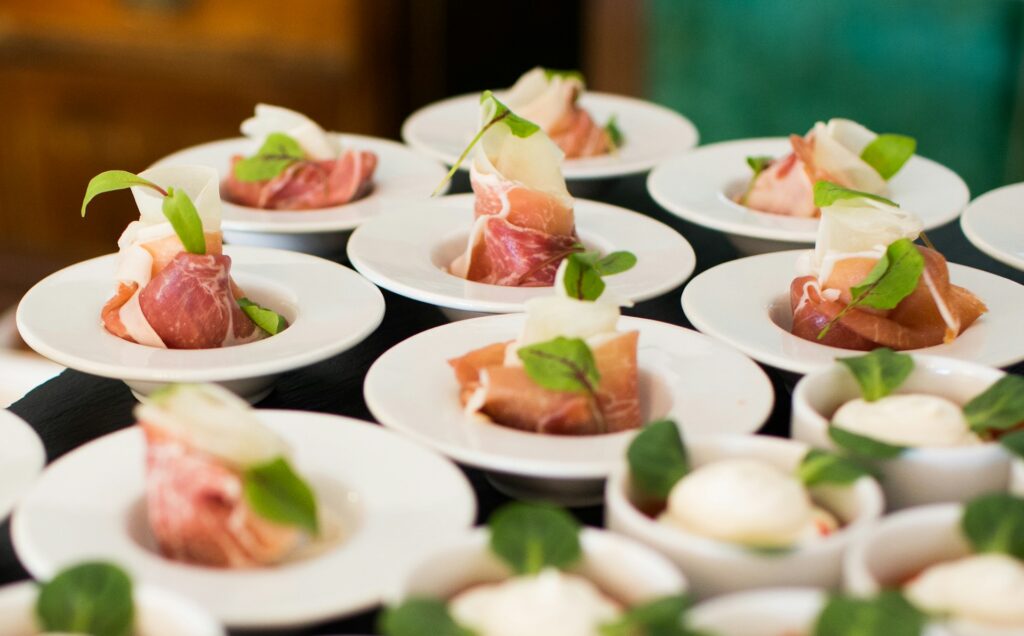
    An antipasto platter is the single most versatile of all Italian appetizers because it requires almost no cooking and scales from a small board for 8 guests to a full grazing table for 150 without changing what goes on it. Prosciutto, salami, soppressata, fresh mozzarella, marinated artichokes, roasted peppers, olives, and a selection of crostini give guests an entire appetizer course to graze through during arrival without requiring anyone to leave the conversation.

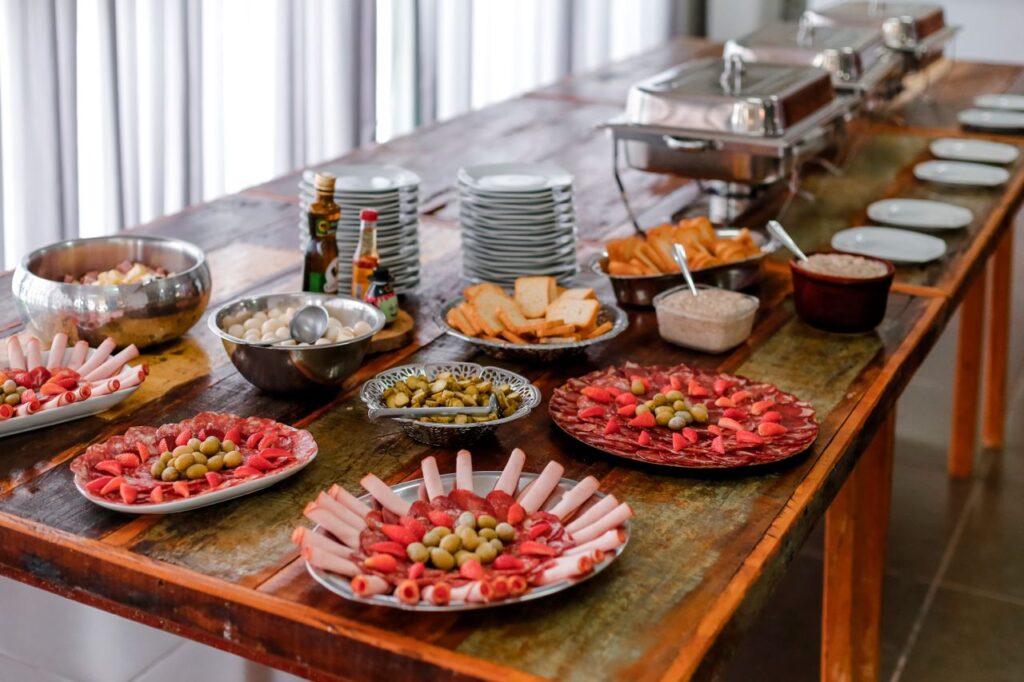
    Italian Appetizers

    For a party of 20 to 30 guests, plan on roughly 3 to 4 ounces of cured meat per person, 2 ounces of cheese per person, and 4 to 6 pieces of bread or crostini per person. For a catered event with a full dinner following, reduce these quantities by about 30 percent since the appetizer course is meant to tide guests over, not fill them up.

    Guest CountCured Meat (oz)Cheese (oz)Crostini / Bread Pieces
    10 guests30 to 40 oz20 oz40 to 60 pieces
    25 guests75 to 100 oz50 oz100 to 150 pieces
    50 guests150 to 200 oz100 oz200 to 300 pieces

    2. Bruschetta

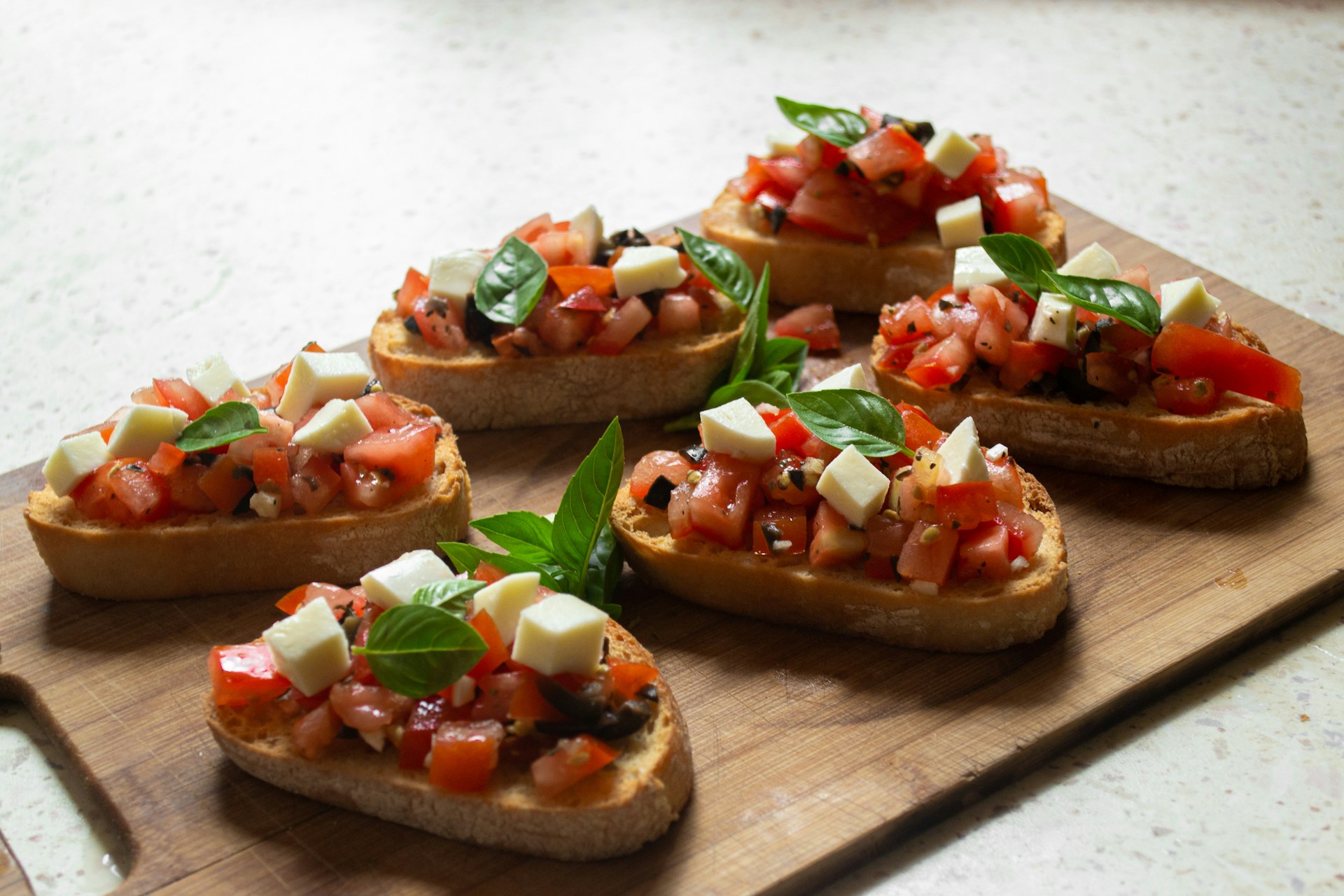
    Bruschetta is one of the most recognized Italian appetizers globally and one of the simplest to execute well at any scale. Grilled or toasted bread rubbed with garlic and topped with fresh tomato, basil, and olive oil takes about 15 minutes to prepare for a party of 20, and the components can be prepped separately and assembled just before guests arrive to keep the bread from getting soggy.

    For a stand-alone appetizer, plan on 2 to 3 pieces of bruschetta per person. For a cocktail hour spread paired with other Italian appetizers, 1 to 2 pieces per person is typically enough since guests will graze across multiple items.

    3. Caprese Skewers

    Caprese skewers are one of the easiest Italian appetizers to make ahead for a party since they can be assembled up to 4 hours in advance and refrigerated until serving without any loss of quality. Cherry tomatoes, fresh basil leaves, and bocconcini mozzarella balls threaded onto a toothpick and drizzled with balsamic glaze are visually striking on a platter and require no utensils, which makes them the ideal standing-reception appetizer.

    For a cocktail hour, plan on 3 to 4 caprese skewers per person alongside other Italian appetizers. For a standalone appetizer with nothing else being served, 6 to 8 skewers per person covers a full appetizer portion.

    What Appetizer Is Italy Known For

    Italy is most known for antipasto as a starter course, which translates literally to “before the meal” and encompasses a broad range of cured meats, cheeses, marinated vegetables, and bread-based bites rather than a single specific dish. According to Pasta Evangelists, the antipasto course is specifically designed to stimulate the appetite for the courses to come, which is why it focuses on quality over quantity rather than filling guests up. The most iconic individual Italian appetizers internationally are bruschetta, caprese salad, arancini, and prosciutto with melon, since all four appear consistently on Italian restaurant menus worldwide and are directly tied to specific Italian culinary traditions rather than regional adaptations.

    4. Arancini

    Arancini are one of the most impressive Italian appetizers for a catered event or dinner party because they are a complete bite in themselves — a crispy, deep-fried risotto ball stuffed with mozzarella and either peas or a meat ragu that guests can eat in two bites without a plate. They require more preparation than a cold platter, but they can be made ahead, refrigerated, and fried to order, or ordered from a caterer as a hot passed appetizer during cocktail hour.

    For a passed appetizer service, plan on 2 to 3 arancini per person during a one-hour cocktail period. For a stationary station where guests serve themselves, plan on 4 to 5 per person.

    5. Prosciutto and Melon

    Prosciutto with melon is one of the most elegant Italian appetizers for a summer event or outdoor party because it requires zero cooking and benefits from warm temperatures that intensify the sweetness of ripe cantaloupe against the salt of paper-thin prosciutto. This combination is one of the oldest in Italian cuisine and one of the most reliably crowd-pleasing at any scale.

    For a cocktail hour, plan on 2 to 3 pieces per person alongside other starters. Use the best quality prosciutto available, since the dish has no other ingredients to mask a lower grade product.

    6. Crostini With Toppings

    Crostini with rotating toppings are one of the most flexible Italian appetizers for a dinner party because the base is the same while the toppings can be changed to accommodate different palates and dietary needs on the same platter. Whipped ricotta with honey, roasted tomato with basil, or chicken liver pate with pickled onions all work on the same toasted baguette slice.

    For a cocktail hour, plan on 3 to 4 crostini pieces per person with two to three topping options available.

    What Italian Starters Are Best For A Large Group

    The best Italian appetizers for a large group are the ones that require no individual assembly at the event and hold their quality for at least two hours at room temperature. An antipasto platter, caprese skewers, bruschetta components assembled separately and combined before service, and arancini held warm in a chafing dish cover the full range of Italian appetizers for a crowd without requiring any kitchen presence during the event itself.

    For groups over 50 guests, a self-serve grazing table built from these starters is more practical than a passed appetizer service, since guests can approach at their own pace rather than waiting for servers to circulate through the room.

    7. Marinated Mozzarella Balls

    Marinated mozzarella balls are one of the simplest Italian appetizers to prepare in advance and one of the most popular at catered events because they require no plating skill and look professional directly from the container. Fresh bocconcini soaked overnight in olive oil, chopped herbs, garlic, and a pinch of chili flakes develop a depth of flavor that makes them taste restaurant-quality with about five minutes of actual preparation.

    For a party platter, plan on 3 to 4 bocconcini balls per person as part of a larger antipasto spread, or 6 to 8 balls per person if they are the primary appetizer being served.

    8. Stuffed Mushrooms

    Stuffed mushrooms are one of the most satisfying Italian appetizers for a cool-weather or indoor event because they are served warm, which fills the guest experience gap that cold antipasto platters do not address. Button or cremini mushrooms stuffed with a mixture of Italian sausage, parmesan, and breadcrumbs can be assembled ahead and baked just before service.

    For a cocktail hour, plan on 2 to 3 stuffed mushrooms per person alongside other Italian appetizers. As a standalone hot appetizer, 4 to 5 per person is a full portion.

    9. The Italian Grazing Table

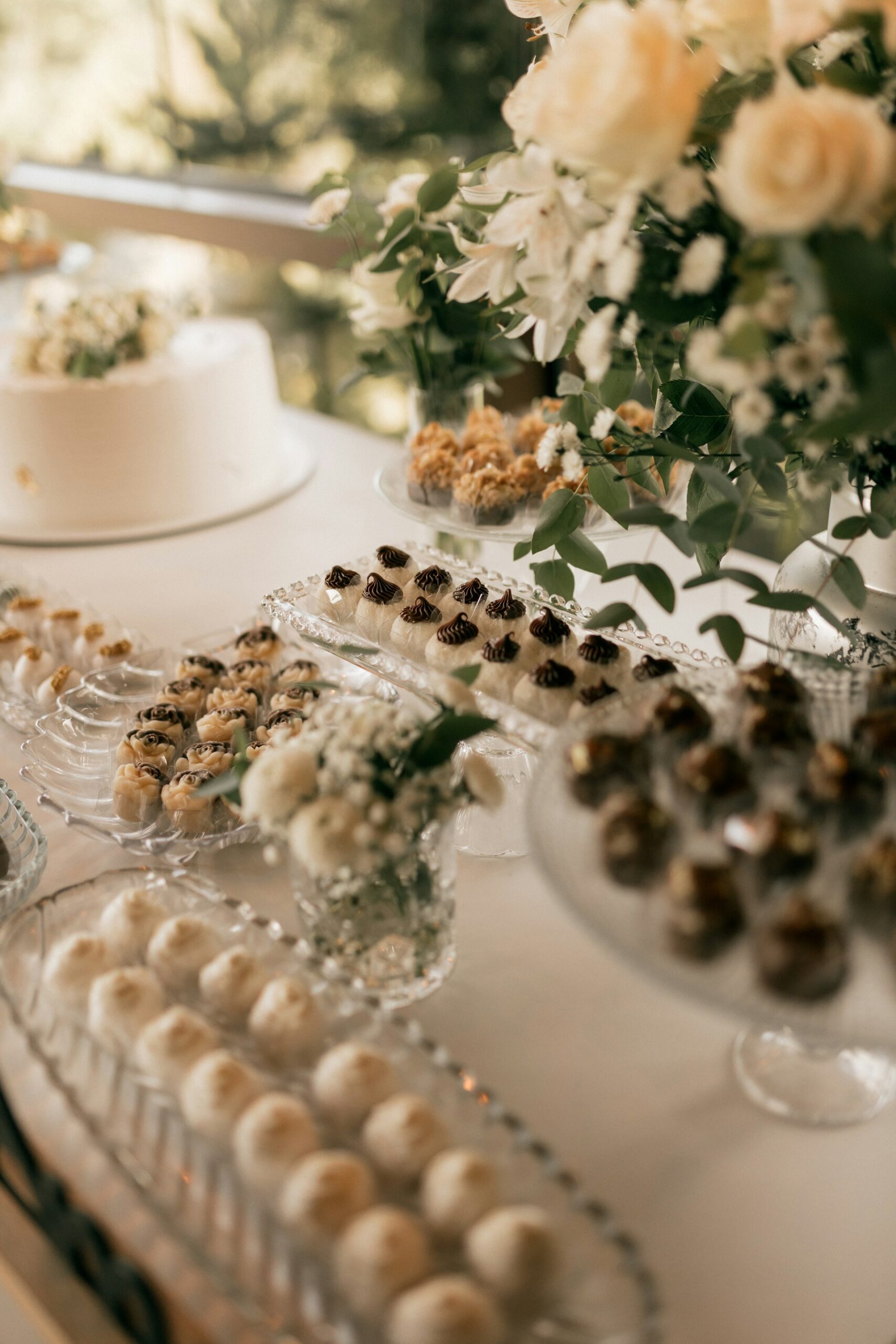
    A full Italian grazing table combines all of the individual Italian appetizers above into one continuous spread that guests can approach throughout the entire cocktail hour or event rather than waiting for a single platter to appear. Antipasto components, bruschetta, caprese skewers, crostini, marinated mozzarella, and seasonal vegetables arranged across a long table creates a visual impact that is consistently one of the most photographed elements of any catered event.

    For an event where the grazing table is the primary food service, plan on the full individual quantities for each item. For a cocktail hour where a full dinner follows, reduce each item quantity by 30 to 40 percent to leave room for the main course.

    Choosing between these Italian appetizers does not have to be an either-or decision. The strongest cocktail hour spreads combine two or three formats — a cold antipasto platter as the visual centerpiece, caprese skewers as the easy no-utensil bite, and one hot item like arancini or stuffed mushrooms to give the spread depth. That combination covers every guest preference in the room without requiring a full kitchen on site, and it gives the event a professional, layered look that a single-item spread simply cannot match.

    Frequently Asked Questions

    What are the most popular Italian appetizers?

    The most popular Italian appetizers for entertaining are antipasto platters, bruschetta, caprese skewers, arancini, and prosciutto with melon. These five Italian appetizers appear consistently at catered events and dinner parties because they balance familiar flavors, visual appeal, and practical make-ahead logistics that work for any size gathering.

    What appetizer is Italy known for?

    Italy is most known for antipasto as a starter course, with bruschetta, caprese salad, and arancini being the most internationally recognized individual Italian appetizers. The antipasto course in Italian dining tradition covers a broad range of cured meats, cheeses, marinated vegetables, and bread-based bites rather than a single specific dish.

    What are some Italian starters for a dinner party?

    The best Italian starters for a dinner party are those that can be assembled in advance and served at room temperature, including caprese skewers, bruschetta, a prosciutto and cured meat board, marinated mozzarella balls, and crostini with rotating toppings. These Italian appetizers give guests something to graze on during arrival without requiring anyone to manage the kitchen while hosting.

    How many Italian appetizers should I plan per person?

    For a cocktail hour with multiple Italian appetizers alongside a full dinner, plan on a total of 6 to 8 pieces per person across all items. For a standalone appetizer reception where Italian appetizers are the primary food being served, plan on 12 to 15 pieces per person to ensure guests are adequately fed without a main course following.

    Final Thoughts On Italian Appetizers

    The best starters for entertaining are the ones that work without a kitchen presence once guests arrive. An antipasto platter, caprese skewers, and bruschetta components assembled ahead of time give guests a complete appetizer experience that runs itself for the first hour of any event, which is exactly what a host or event organizer needs. For more ideas on building a full Italian spread around these starters, see our catering menu ideas guide or our grazing table catering post.

    If you are planning an event in the Bradford, PA area and want a professionally assembled Italian appetizer spread delivered and ready to serve, Curcio’s Italian Catering can build a full grazing table or cocktail hour platter around any of these Italian appetizers for any guest count.er around any of these Italian appetizers for any guest count.

  • Catering for 50 People Cost: 7 Proven Ways to Save Big

    Catering for 50 People Cost: 7 Proven Ways to Save Big

    Catering for 50 people cost falls between $1,000 and $5,500 total, or $20 to $110 per person, depending on service style, menu complexity, and whether you hire drop-off or full-service. Most casual events land at $25 to $50 per person. Understanding every variable in that range is how you stop overpaying and start planning with confidence.

    This guide covers real pricing by service style, an Italian food quantity calculator for 50 guests, hidden fees to watch for, and 7 ways to bring the total down without cutting corners on food.

    How Much Does Catering for 50 People Cost on Average?

    The average catering for 50 people cost sits between $1,250 and $2,750 for a standard buffet event. That works out to $25 to $55 per person before gratuity and add-on fees.

    The range is wide because “catering” covers everything from a drop-off pasta tray to a staffed plated dinner. According to event planning resource Michaelis Events, full-service catering for 50 guests can reach $44 to $110 or more per person once staffing, equipment rental, and service charges are added. Drop-off catering at the lower end runs $15 to $30 per person for a solid menu with no attendant on site.

    The table below shows the real price range by service style for 50 guests.

    Catering Cost for 50 People by Service Style

    Service StylePrice Per PersonTotal for 50 GuestsWhat’s Included
    Drop-off catering$15 to $30$750 to $1,500Food in trays, disposable serving ware, no staff
    Buffet with setup$25 to $55$1,250 to $2,750Chafing dishes, setup, light cleanup, 1 attendant
    Family-style service$30 to $60$1,500 to $3,000Platters to tables, staff present throughout
    Full-service plated$55 to $110+$2,750 to $5,500+Wait staff, full setup and breakdown, plated courses
    Food truck$20 to $45$1,000 to $2,250Live cooking, minimal host cleanup required

    Most private events fall in the buffet or family-style tier.

    Catering for 50 People Cost

    What Factors Drive Catering for 50 People Cost Higher?

    1. Menu Complexity

    A single pasta dish with salad and bread costs far less per head than a 3-course Italian dinner with antipasto, dual entrees, and dessert. Scratch-made dishes requiring skilled prep time cost more than heat-and-serve options. Going from a 1-course to a 2-course offering typically adds $8 to $15 per person.

    2. Service Style

    Service style is the single biggest pricing lever in any catering for 50 people cost estimate. Drop-off requires no staff and no equipment rental. Full-service includes labor for setup, service, and breakdown. That labor compounds fast.

    3. Location and Travel

    Many caterers charge a delivery or travel fee outside their primary service area. For events in McKean County and surrounding areas including Kane, Smethport, Olean, and Wellsville, confirm upfront whether travel is included or billed separately. A $5 to $15 per-person travel add-on changes the math on a 50-guest event.

    4. Date and Advance Notice

    Peak catering season runs May through October, with holiday spikes in November. Booking 4 to 6 weeks ahead avoids rush fees and secures your preferred date. Some caterers charge a premium for bookings under 2 weeks.

    5. Dietary Accommodations

    Adding gluten-free, vegetarian, or allergen-specific options increases prep time and ingredient cost. Most caterers absorb this when given advance notice. Last-minute requests often carry an upcharge.

    How Much Food Do You Need for 50 People?

    Food quantity planning is where hosts most often underestimate their catering for 50 people cost. The National Restaurant Association recommends planning for 6 ounces of protein per adult and 4 ounces of each side dish per person for a buffet-style meal. For industry-standard guidance on food quantity planning, the National Restaurant Association at restaurant.org is the authoritative reference.

    For a 50-person Italian buffet, use this quantity table as your baseline.

    Italian Catering Quantity Guide for 50 Guests

    DishQuantity NeededNotes
    Pasta (main dish)12 to 15 lbs dry / 25 to 30 lbs cooked6 to 8 oz cooked per person
    Lasagna4 to 5 full hotel trays1 tray serves approximately 10 to 12 guests
    Chicken entree35 to 40 piecesAccount for guests taking seconds
    Meatballs150 to 200 pieces3 to 4 per person as a side
    Salad10 to 12 lbs dressed3 to 4 oz per person
    Bread / rolls60 to 75 piecesGuests typically take 1 to 2 each
    Sauce (marinara or bolognese)3 to 4 gallonsCovers pasta and dipping

    If your event runs after 5 PM, guests eat roughly 20% more than at a lunch event. Build that buffer into your order or discuss it with your caterer before finalizing quantities.

    For more on how a pasta-forward menu scales efficiently, see Curcio’s pasta bar catering guide.

    What Does Italian Catering for 50 People Cost by Budget Tier?

    Italian food is one of the most cost-efficient catering cuisines for large groups. Pasta, sauce, and bread scale well without quality loss. Family-style service feels natural with Italian food in a way plated cuisines often do not.

    Here is a 3-tier catering for 50 people cost breakdown for an Italian menu.

    Italian Catering Budget Tiers for 50 Guests

    Budget LevelPer PersonTotal EstimateWhat You Get
    Budget$18 to $25$900 to $1,250Drop-off pasta, salad, bread. No staff.
    Mid-range$28 to $45$1,400 to $2,250Buffet with 1 or 2 proteins, sides, setup
    Full experience$50 to $75+$2,500 to $3,750+Multi-course family-style, staffed, premium ingredients

    Scratch-made Italian catering from a local independent caterer typically costs less than a chain restaurant catering order at the same quality level. You are not paying chain overhead or franchise margins. According to Evolved Events Catering, catering ranges from $20 to $200 per person nationally depending on those same variables.

    For a detailed look at how family-style service works at scale, see Curcio’s family style catering overview.

    What Hidden Fees Inflate the Catering for 50 People Cost?

    Catering quotes often look lower than the final invoice. Before signing anything, ask specifically about each line item below.

    Common Catering Add-On Fees

    Fee TypeTypical RangeNotes
    Delivery or travel fee$25 to $150+Varies by distance; confirm if included
    Setup and breakdown fee$50 to $300Often separate from food cost
    Service charge18% to 22% of food totalNot always the same as gratuity
    Gratuity15% to 20% of totalStandard for staffed service
    Equipment rental$5 to $15 per personChafing dishes, linens, utensils
    Cake cutting fee$1.50 to $3 per personIf you bring an outside dessert
    Overtime fee$50 to $150 per hourIf event runs past contracted window

    A transparent caterer itemizes every one of these before you book. If a quote is suspiciously low, request a full line-item breakdown.

    For current industry benchmarks on catering costs and full-service quote expectations, The Knot’s catering cost guide is a reliable reference.

    7 Proven Ways to Lower Catering for 50 People Cost

    1. Choose Drop-Off Over Full-Service

    Eliminating on-site staff is the fastest way to cut catering for 50 people cost by 30 to 50%. The food quality stays identical. The only difference is who carries the tray to the table.

    2. Simplify to 2 Proteins Maximum

    Every additional entree adds prep labor, equipment, and waste risk. A well-chosen Italian menu with 1 pasta and 1 protein outperforms a 4-item spread at every price point.

    3. Lean Into Pasta and Bread

    Pasta is the most cost-efficient catering food on the planet. It scales cleanly, holds temperature well, and guests love it. Anchoring your 50-person menu in pasta keeps per-head cost low without cheapening the meal.

    4. Book at Least 6 Weeks Out

    Early bookings avoid rush premiums and give you time to compare quotes. A 6-week lead time also allows the caterer to source ingredients at better pricing, savings that often get passed to the client.

    5. Skip the Linen Rental

    Caterers frequently mark up linen and tablecloth rentals. Buying disposable kraft paper table covers or renting from a party supply store directly cuts this line item entirely.

    6. Provide Your Own Serving Equipment

    If you own or can borrow chafing dishes and serving utensils, you eliminate equipment rental fees that typically add $5 to $15 per person.

    7. Pay the Deposit Early to Lock the Rate

    Some caterers offer a locked rate for early-deposit bookings, particularly during peak season. Paying 25 to 30% down at contract signing can freeze the per-person price even if ingredient costs rise before your event date.

    Frequently Asked Questions About Catering for 50 People Cost

    How much should it cost to cater for 50 people?

    Catering for 50 people cost typically lands between $1,250 and $2,750 for a buffet-style event, or $25 to $55 per person. Full-service plated events run $2,750 to $5,500 or more. Drop-off catering is the most budget-friendly option at $750 to $1,500 for a group of 50 with a solid Italian menu.

    How do you cater for 50 guests on a budget?

    Choose drop-off or buffet service over full-service staffing, limit the menu to 1 or 2 proteins with pasta and salad, and book at least 4 to 6 weeks ahead to avoid rush premiums. Italian food is well-suited to budget catering because pasta, sauce, and bread scale efficiently without losing quality.

    How much food do you need for 50 guests?

    For a buffet with 50 guests, plan for 12 to 15 pounds of dry pasta, 4 to 5 full lasagna trays, 35 to 40 pieces of a chicken entree, 60 to 75 bread rolls, and 3 to 4 gallons of sauce. Add a 15 to 20% buffer for evening events where guests eat more.

    What is the cheapest way to feed 50 people at a party?

    Drop-off catering from a local caterer runs $15 to $25 per person and is the most affordable option. An Italian menu is one of the lowest-cost options at scale because pasta dishes stretch well without sacrificing flavor. Skipping full-service staffing and bringing your own serving equipment lowers the total further.

    Is it cheaper to cater or cook your own food for 50 people?

    DIY cooking for 50 guests costs $8 to $15 per person in raw ingredients, but that excludes your time, food safety risk, and the equipment needed to keep food at serving temperature. Professional catering at $25 to $35 per person typically delivers better results at lower real cost once those factors are counted.

    How far in advance should you book catering for 50 people?

    Book at least 3 to 4 weeks ahead for a 50-person event, and 6 to 8 weeks for peak season dates from May through October. Early booking lets you finalize the menu, confirm dietary needs, and get a written contract with a full price breakdown.

    What to Ask Before You Lock In a Catering Quote for 50 Guests

    Getting the right caterer is about more than finding the lowest catering for 50 people cost. Before you commit, confirm 4 things in writing.

    First, verify the caterer has experience with groups of 50 or more. Second, ask how food is kept at safe serving temperatures during delivery and throughout your event. Third, request a fully itemized quote that breaks out every fee listed in the table above.

    Finally, ask about the deposit amount and what happens if your guest count changes within 2 weeks of the event. Most reputable caterers require 25 to 50 percent down to hold the date, with a clear policy on headcount adjustments.

    Final Thoughts on Catering for 50 People Cost

    Catering for 50 people cost is almost entirely within your control once you understand the 3 levers: service style, menu complexity, and advance booking timing. Drop-off or buffet Italian catering in the $25 to $45 per person range delivers a complete, satisfying meal without the overhead of a full-service event.

    If you are planning an event in Bradford, Kane, Smethport, Olean, or anywhere in McKean County and want a transparent quote for scratch-made Italian food for 50 guests, you are welcome to reach out to Curcio’s Italian Catering directly. Every quote starts with a full breakdown, no surprise fees.

  • 7 Proven Fourth Of July Catering Ideas Worth Trying

    7 Proven Fourth Of July Catering Ideas Worth Trying

    Fourth of july catering decisions usually come down to one question with only a few days left before the holiday. Do you want a backyard full of burgers and hot dogs, or something your guests will actually talk about afterward. An Italian menu solves this by giving you the same easy, outdoor, self serve format everyone expects from a cookout, just built around pasta, grazing boards, and grilled Italian sausage instead of the usual lineup.

    This guide breaks down 7 fourth of july catering ideas built for backyard parties, what each one costs per person, and how to plan portions so you are not scrambling the morning of the party.

    How Much Does Fourth Of July Catering Cost

    Fourth of july catering typically runs $15 to $35 per person for drop off and grazing style setups, and $30 to $60 per person for staffed formats like a pasta bar or full grill station. The total depends mostly on guest count and whether you want staff managing the grill and serving line throughout the party. A 40 guest backyard party with a drop off grazing table might run $700 to $1,200, while the same party with a staffed pasta bar and grill station could run $1,500 to $2,400.

    In practice, the cost difference between formats comes down to labor, not the food itself. A grazing table that guests serve themselves from costs less than a station with staff actively grilling and plating throughout the afternoon.

    fourth of july catering
    Catering FormatCost Per PersonBest For
    Grazing table and antipasto spread$15 to $25Casual backyard parties under 50 guests
    Drop off pasta salad and sides$12 to $22Potluck style gatherings without staff
    Staffed pasta bar$25 to $45Mid size parties wanting hot food on demand
    Grilled Italian sausage station$20 to $35Cookouts that want a grill centerpiece
    Family style Italian spread$35 to $60Smaller, sit down holiday dinners

    1. The Italian Grazing Table

    A fourth of july catering spread built around a grazing table works because it sits outside in the heat better than anything that needs to stay hot. Cured meats, fresh mozzarella, marinated vegetables, and bruschetta can sit out for hours of grazing without anyone managing a chafing dish, which matters at a holiday party that often runs from afternoon into fireworks.

    For under 50 guests a single long table works well. Add red, white, and roasted red pepper accents to the spread and it doubles as patriotic table decor without any extra cost.

    2. Grilled Italian Sausage And Peppers Station

    Sausage and peppers is the most natural swap for a traditional burger and hot dog station, since it uses the same grill setup your guests already expect at a cookout. Sweet and hot Italian sausage grilled alongside peppers and onions, served on a roll or over polenta, gives the same handheld, standing up convenience as a hot dog without feeling like a downgrade.

    This station works especially well paired with the grazing table above, since one covers cold bites while the other handles the hot main course.

    3. The Pasta Bar Station

    A pasta bar lets guests build their own dish, which keeps a line moving even when half your guests show up at 2pm and the other half show up at 6pm for fireworks. Two pasta shapes, two or three sauces, and a station for fresh parmesan and herbs covers most appetites without requiring a kitchen on site.

    For a party under 50 guests, one station with two staff usually runs 45 to 60 minutes per serving wave, which fits naturally into a long holiday afternoon where people eat in shifts rather than all at once.

    What Is The Cheapest Fourth Of July Catering Option

    The cheapest fourth of july catering option is a drop off pasta salad and side dish spread, since it skips staffing entirely and pasta stretches further per dollar than grilled meats. A large pan of pasta salad with Italian dressing, olives, and fresh vegetables can feed 30 to 40 guests for roughly $10 to $15 per person, well under the cost of any staffed grill station.

    4. Caprese Skewers And Cold Antipasto

    Heat is the biggest planning challenge for any outdoor July event, and cold dishes solve it without sacrificing flavor. Caprese skewers, marinated olives, and a cold antipasto platter require no reheating and hold their quality for hours, which matters since USDA food safety guidance recommends discarding perishable food left out more than 1 hour once outdoor temperatures climb above 90 degrees.

    5. The Patriotic Dessert Table

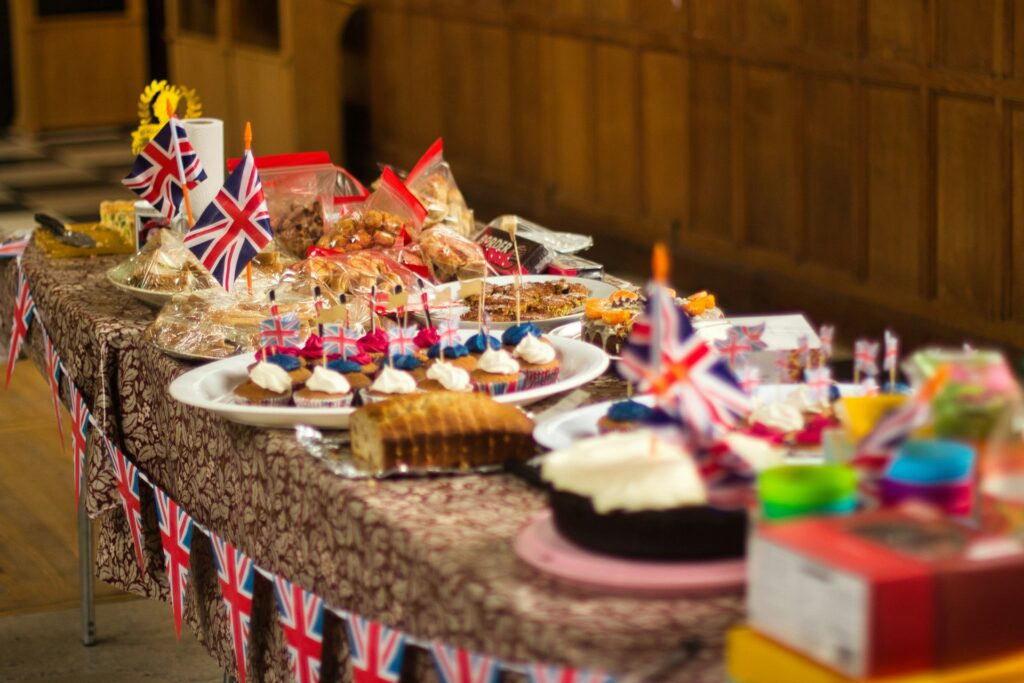
    Pairing a savory Italian spread with a red, white, and blue dessert table is one of the easiest ways to add a fourth of july catering centerpiece without extra cost, since desserts are typically the lowest cost per person item on any catering order. Cannoli with strawberries and blueberries, or a simple sheet cake with berry topping, covers the patriotic theme without needing a separate bakery order.

    6. Drop Off Family Style Trays

    For smaller backyard gatherings or families who want full control over presentation, drop off family style trays deliver prepared Italian dishes in disposable pans without staff on site. Baked ziti, chicken parmesan, and a simple salad arrive ready to serve, which works well for a fourth of july catering order under 30 guests where a full staffed event would be overkill.

    How Much Food Should You Order For 40 Guests

    For 40 guests, plan on roughly 6 pounds of pasta, 120 to 160 appetizer pieces if grazing items are the main course, and 12 to 14 pounds of grilled sausage if including a protein station. Buffer your order by an additional 10 percent, since holiday parties tend to run longer than a typical event and guests often return for seconds during fireworks.

    Guest CountPasta (lbs)Appetizer PiecesSausage (lbs)
    20 guests3 lbs60 to 80 pieces6 to 7 lbs
    40 guests6 lbs120 to 160 pieces12 to 14 lbs
    75 guests11 lbs225 to 300 pieces22 to 25 lbs

    7. The Full Backyard Bundle

    Combining a grazing table, a sausage and peppers station, and a dessert table into one package covers the entire fourth of july catering need for most backyard parties without requiring a sit down meal format. This bundle approach lets guests graze through the afternoon, grab a hot sausage when they want it, and finish with dessert near fireworks time, all without anyone managing multiple separate vendors.

    Frequently Asked Questions

    How far in advance should I book fourth of july catering?

    Most caterers recommend booking fourth of july catering 1 to 2 weeks ahead, since this is one of the busiest catering weekends of the summer. If you are reading this within a few days of the holiday, call directly rather than emailing, since availability moves fast this close to the date.

    Can fourth of july catering accommodate dietary restrictions?

    Yes, most Italian caterers can adjust for vegetarian, gluten free, or dairy free guests with notice. A pasta bar already accommodates this easily with a gluten free pasta option and a vegetable based sauce alongside the standard offerings.

    What is the average guest count for a fourth of july party?

    Backyard fourth of july parties typically range from 20 to 50 guests, though some neighborhood or block parties run larger. Guest count is the main factor in deciding between a drop off setup and a staffed station format.

    Does fourth of july catering work for an outdoor party in the heat?

    Yes, formats built around grazing tables, cold antipasto, and pasta salad are specifically suited to outdoor heat since they do not require constant temperature control. Hot stations like a sausage grill or pasta bar work too, but benefit from shade or an early afternoon serving window before peak heat.

    Final Thoughts On Fourth Of July Catering

    The format you choose for fourth of july catering should match how long your party runs and how much heat exposure the food will face. A grazing table and cold antipasto spread handles an all day backyard gathering better than anything requiring constant reheating, while a staffed pasta bar or sausage station works well for a shorter, more concentrated serving window. For more menu inspiration, see our full catering menu ideas guide, or check out our pasta bar catering post for a deeper look at that format specifically.

    If you are planning a fourth of july party in the Bradford, PA area and want an Italian menu built around a grazing table, sausage station, or pasta bar, Curcio’s Italian Catering can help you plan portions and pick a format that fits your guest count and timeline, even on short notice this close to the holiday.

  • Bridal Shower Catering: 7 Powerful Expert Tips

    Bridal Shower Catering: 7 Powerful Expert Tips

    Bridal shower catering is the single most important decision you will make when planning this pre-wedding celebration. Get it right and guests leave full, happy, and impressed. Get it wrong and no amount of decorations or games can save the afternoon.

    This guide gives every maid of honor, mother of the bride, or event host the exact information needed to plan a bridal shower menu that wows — covering food styles, costs, portion planning, and why Italian catering outperforms every other cuisine at this type of event.

    What Is Bridal Shower Catering and Why Does It Matter?

    Bridal shower catering refers to the professional preparation and service of food for a pre-wedding celebration honoring the bride-to-be. Unlike a wedding reception, a bridal shower is intimate — typically 20 to 50 guests — and runs 2 to 4 hours in a relaxed, conversational setting.

    The food must match that energy. It needs to be elegant, easy to eat while mingling, and generous enough that no guest goes home hungry.

    According to The Knot‘s annual wedding survey, food quality is the single most-discussed element of any bridal event among guests — outranking decorations, games, and venue combined. That makes bridal shower catering not just a logistical decision but a strategic one.

    How Much Does Bridal Shower Catering Cost?

    Cost is the first question every host asks. The honest answer depends on 3 variables: guest count, service style, and whether you choose drop-off or full-service catering.

    Here is a realistic bridal shower catering cost breakdown for 2026:

    Service StylePrice Per PersonBest For
    Drop-off finger foods$15 to $30Casual home or backyard showers
    Buffet with staff$30 to $55Mid-size showers, 20 to 60 guests
    Family style lunch$35 to $65Intimate gatherings wanting an elevated feel
    Full plated luncheon$60 to $100+Formal venue showers, 30 to 75 guests
    Grazing station setup$20 to $40DIY-friendly with professional presentation

    For a bridal shower of 30 guests with buffet-style catering for a bridal shower, most hosts spend $900 to $1,650 on food. Full-service catering with staff, setup, and cleanup runs $1,800 to $3,000 for the same size event.

    Always request an itemized quote. A professional catering company will break out food, labor, equipment, and travel fees separately.

    What Food Should You Serve at a Bridal Shower?

    The best bridal shower food ideas lean into 3 principles: variety, elegance, and ease of eating. Every dish should be manageable in one or two bites or served in small portions guests can handle while moving around the room.

    Here is a breakdown of the most popular bridal shower catering food categories:

    Food CategoryExamplesWhy It Works
    Finger foods and small bitesCaprese skewers, bruschetta, stuffed mushroomsEasy to eat standing, no full plate needed
    Salads and light sidesArugula salad, Italian pasta salad, fruitRefreshing, visually beautiful, crowd-pleasing
    Warm family style entreesBaked pasta, chicken piccata, garlic breadSatisfying for lunch-hour events
    Antipasto and charcuterieCured meats, cheeses, olives, roasted peppersElegant, grazes well for 2 to 3 hours
    DessertsMini cannoli, tiramisu cups, Italian cookiesSweet finish, photographs beautifully

    Italian food is the standout choice for bridal shower catering menus because it covers every single category naturally. One scratch-made Italian menu moves from antipasto through pasta to dessert without feeling forced or disconnected.

    Bridal Shower Catering Styles: Which One Is Right for Your Event?

    Not every shower calls for the same setup. Here is a direct comparison of the most common bridal shower catering service styles:

    Service StyleGuest CountVenue TypeFormality
    Passed finger foods15 to 40Home, backyard, small hallCasual
    Buffet30 to 80Banquet hall, restaurantSemi-formal
    Family style20 to 60Any venue with tablesIntimate and elevated
    Plated luncheon25 to 75Formal venueFormal
    Grazing stations20 to 100Any venueCasual to semi-formal

    Family style catering is the fastest-growing format for bridal shower catering right now. According to the National Restaurant Association‘s 2024 event trends report, communal dining formats grew 34% in popularity for private events between 2022 and 2024.

    It creates a warm, unhurried experience where guests share platters at the table. For Italian bridal shower food especially, family style is the most natural fit — pasta, salad, and bread are designed to be passed around.

    How Much Food Do You Need for a Bridal Shower?

    Portion planning is where most hosts either overspend or leave guests wishing there was more. Use this framework as a starting point:

    Event FormatQuantity Per Guest
    Finger foods only, 2 hours8 to 12 pieces per person
    Light lunch with sides, 2 to 3 hours4 to 6 oz protein, 3 to 4 oz per side
    Full buffet lunch, 2 to 4 hours5 to 7 oz protein, 4 to 5 oz per side
    Grazing table only, 3 to 4 hours3 to 4 oz charcuterie per person
    Dessert service2 to 3 pieces per person

    A professional caterer will calculate these numbers for you. Always provide a confirmed guest count at least 72 hours before the event and ask your caterer to build in a 10 to 15 percent buffer.

    One consistent finding from experienced event caterers: bridal shower guests eat more than hosts expect. Order slightly more rather than slightly less. Leftover bridal shower catering food is a far better problem than running short mid-event.

    The Best Italian Bridal Shower Catering Menu

    Italian food for a bridal shower catering menu checks every box. It is visually stunning, deeply satisfying, and familiar enough that no guest is left without a favorite dish on the table.

    Here is a complete scratch-made Italian bridal shower catering menu framework:

    Starter Course Antipasto platter with cured meats, fresh mozzarella, marinated olives, roasted red peppers, and artichoke hearts. Bruschetta on toasted bread with fresh tomato and basil. Caprese skewers with cherry tomatoes, mozzarella, and balsamic glaze.

    Salad Classic Caesar salad with scratch-made dressing. Italian chopped salad with romaine, salami, banana peppers, chickpeas, and red onion in a red wine vinaigrette.

    Main Course (Family Style) Baked penne or ziti with scratch-made tomato sauce and melted mozzarella. Chicken piccata or lemon caper chicken. Fresh garlic bread baked on-site.

    Dessert Mini cannoli filled to order. Tiramisu in individual cups. Assorted Italian cookies including biscotti and almond cookies.

    This menu works for nearly every dietary need at the table. The antipasto and salad courses are naturally gluten-friendly and vegetarian. The pasta and chicken give guests a filling anchor. The desserts feel indulgent without being heavy.

    How Far in Advance Should You Book Bridal Shower Catering?

    Booking timing is one of the most overlooked parts of bridal shower catering planning. Here is a practical guide:

    Event SizeBooking Window
    Small shower, 10 to 20 guests3 to 4 weeks ahead
    Mid-size shower, 20 to 50 guests4 to 8 weeks ahead
    Large shower, 50 to 100 guests8 to 12 weeks ahead
    Peak season (April through June)Add 4 to 6 extra weeks

    Spring is the busiest season for bridal shower catering. April 2026 saw 6,600 monthly searches for bridal shower catering — more than double any other month of the year. If your shower falls between March and June, book as early as possible.

    Always confirm your catering booking with a signed agreement and a deposit. A verbal commitment is not enough when this much depends on getting the food right.

    FAQ: Bridal Shower Catering

    How much does bridal shower catering cost per person?

    Bridal shower catering costs between $15 and $100 per person depending on service style. Finger food setups run $15 to $30. Buffet or family style with staff runs $30 to $65. Full plated luncheon service runs $60 to $100 or more. Always request an itemized quote before signing any agreement.

    What food is typically served at a bridal shower?

    Bridal shower catering menus typically include finger foods and small bites, light salads, warm entrees served buffet or family style, and a dessert course. Italian food is particularly well-suited because it covers every course naturally and presents beautifully on shared platters at the table.

    How many guests typically attend a bridal shower?

    According to The Knot, the average bridal shower in the United States has between 20 and 50 guests. Smaller showers of 10 to 20 guests are common for close-knit families. Your caterer will use your confirmed headcount to calculate portions and staffing.

    Should a bridal shower have a seated lunch or finger foods?

    It depends on your venue and event duration. Finger foods work best for casual 2-hour home showers. A seated family style or buffet lunch suits 2 to 4 hour events at a venue with tables. Family style is the most popular current format because it feels intimate and communal without requiring formal plated service.

    How far in advance should I book catering for a bridal shower?

    Book 4 to 8 weeks ahead for most mid-size showers. For spring events between April and June, book 8 to 12 weeks ahead — peak bridal season fills local caterers fast. Small casual showers can sometimes be arranged in 2 to 3 weeks, but earlier booking always means better menu options and guaranteed availability.

    Plan Your Bridal Shower Catering With Confidence

    The right bridal shower catering does not need to be complicated. It needs to be good, generous, and thoughtfully matched to the occasion. Scratch-made Italian food — antipasto, fresh pasta, warm bread, and handmade desserts served family style — gives guests something to gather around and remember.

    If you are planning a bridal shower in Bradford, Smethport, Kane, Olean, or Wellsville, Curcio’s Italian Catering serves McKean County and surrounding areas with fully scratch-made menus.

  • Birthday Party Catering: 7 Essential Things to Know

    Birthday Party Catering: 7 Essential Things to Know

    Birthday party catering is the difference between a host who spends three days cooking and misses their own celebration and a host who is present for every single moment of it. It is also the difference between food guests politely eat and food they specifically remember when they talk about the party a month later.

    Most people underestimate how much the food shapes the memory of a birthday celebration. Not because birthdays are about food in any formal sense but because food is the thing everyone experiences at the same time, in the same room, together. When it is genuinely good it becomes part of the story of the evening. When it is forgettable it leaves a gap where the warmth of the occasion should have been.

    This guide covers everything a host needs to know about birthday party catering before booking anyone.

    1. What Is Birthday Party Catering and What Does It Actually Include

    Birthday party catering is a professional food service where a catering team handles everything related to the food at your celebration — the menu planning, the preparation, the setup, the service during the event, and the cleanup afterward. The host does not cook, does not manage food logistics, and does not spend the birthday in the kitchen. That is the fundamental value of professional birthday party catering.

    What most people do not realize until they have experienced it is that the value is not just in the food itself. It is in the presence it buys. A host who is not managing catering trays and checking food temperatures is a host who is laughing with their guests, sitting at the table with the people they invited, and actually experiencing the celebration they planned.

    Here is what a complete birthday party catering service includes from start to finish:

    StageWhat the Catering Team Handles
    Initial consultationMenu planning, guest count, dietary needs, event format, budget discussion
    Menu developmentCustom menu built around the birthday person and their guests
    Tasting sessionHost tastes the actual dishes before the event so nothing is a surprise
    Day-of arrivalTeam arrives 1.5 to 2 hours early to set up stations, arrange food, prepare final elements
    Service during the eventStaff manage food replenishment, guest interaction, timing, and presentation
    Dessert serviceBirthday desserts served at the right moment in the evening
    Full breakdown and cleanupEverything packed up and removed after the event ends

    According to the National Restaurant Association, off-premise and private event catering is the fastest growing segment of the food service industry in the United States, driven largely by hosts who want professional food quality at personal celebrations without the stress of managing it themselves.

    2. What Birthday Party Catering Works Best For Different Celebrations

    Not every birthday party has the same needs. A first birthday with 30 family members in a backyard is a completely different event from a 50th birthday dinner for 80 guests in a rented hall. Birthday party catering scales to fit both of those occasions and every variation in between — but what works best depends on the specific celebration.

    Here is a story about what birthday party catering actually looks like in practice. A family in Bradford PA was planning a 60th birthday party for their mother. She had always been the one who cooked for every family gathering — every Christmas dinner, every Thanksgiving spread, every summer cookout. For her 60th they wanted to turn the tables. They wanted her to sit down for once, have someone pour her wine, and eat food someone else made for her.

    The catering team built an Italian menu around her favorite dishes. When the pasta arrived at the table in wide ceramic bowls and she realized she had nothing to do but enjoy it, she cried. That is what birthday party catering does when it is done right.

    Here is how birthday party catering fits different celebration types:

    Celebration TypeGuest CountBest Catering FormatWhy It Works
    Intimate birthday dinner10 to 25 guestsPlated family style Italian dinnerFeels personal, special, and occasion-worthy
    Backyard birthday party25 to 60 guestsGrazing table plus family style main courseCreates social energy without formal service
    Milestone birthday celebration50 to 100 guestsFull multi-course Italian dinnerElevation matches the significance of the occasion
    Large birthday gathering100 to 150 guestsItalian buffet with staffed pasta stationScales well without losing food quality
    Kids birthday party20 to 50 guestsSimple focused menu with crowd-pleasing Italian dishesEasy, fast, universally loved

    The format matters but it matters less than the quality of the food and the experience of the team running it. A well-executed birthday party catering operation makes any of those formats feel effortless for the host and memorable for the guests.

    3. What Does a Birthday Party Catering Menu Look Like

    A birthday party catering menu should reflect two things above all others: the preferences of the birthday person and the practical needs of the guest list. It is not about what is easiest to prepare. It is not about what is cheapest to source. It is about what will make this specific celebration feel like it was built for the people attending it.

    Italian food performs exceptionally well as birthday party catering for a straightforward reason. It is the cuisine most associated with celebration in American culture — with abundance, with sharing, with the warmth of being at a table with people you love. When rigatoni al forno arrives in a wide ceramic bowl and everyone at the table reaches for the serving spoon at the same time, something happens in the room that other cuisines do not reliably produce.

    According to the James Beard Foundation, the food choices that create the strongest positive memories at personal celebrations are those rooted in recognizable culinary traditions with clear cultural warmth — Italian food consistently ranks at the top of that category.

    Here is what a full Italian birthday party catering menu looks like from arrival through dessert:

    CourseWhat Is ServedHow It Is Presented
    Arrival spreadItalian antipasto board with cured meats, fresh cheeses, bruschetta, marinated vegetablesOn the table before guests are seated — they graze on arrival
    First courseHandmade pasta: rigatoni al forno, pappardelle with slow-cooked ragùFamily style in wide ceramic bowls at each table
    Main courseChicken masala, braised short rib, or grilled seasonal proteinDeep serving pans passed around each table
    SidesRoasted seasonal vegetables, freshly baked Italian breadAlongside the main course in separate serving dishes
    Birthday dessertTiramisu platters, cannoli, house-made Italian sweetsServed at the table with candles if requested

    Every dish on that menu is made from scratch the day of the event. That is not a standard across the birthday party catering industry — it is a specific commitment that separates caterers who genuinely care about the food from those who deliver an acceptable version of it.


    4. What Is the Difference Between Birthday Party Catering and Just Ordering Food

    This is the question most first-time hosts ask and the answer shapes every decision that follows.

    Ordering food for a birthday party means placing an order with a restaurant or delivery service, having it arrive in containers, and managing everything from there yourself. Someone has to pick it up or receive the delivery. Someone has to reheat it or keep it warm. Someone has to arrange it on serving dishes or leave it in the containers it came in. Someone has to manage refills when things run low. Someone has to deal with the mess at the end of the night. That person is almost always the host.

    Birthday party catering means a professional team handles every single one of those steps. The food is made fresh for your event, transported properly, set up by people who do this professionally, served to your guests at the right moment, and cleaned up completely before the team leaves. The host’s only job is to be at their own party.

    Here is the full comparison:

    FactorProfessional Birthday Party CateringOrdering Food or DIY
    Food qualityMade fresh for your event, scratch-preparedPrepared in advance, often reheated or held
    Host experiencePresent and engaged with guests throughoutManaging food logistics for much of the event
    Guest experienceServed, attended to, food arrives at the right timeSelf-service, variable timing, host unavailable
    CleanupHandled entirely by the catering teamFalls to the host or family after guests leave
    Stress levelVery low — all food decisions made in advanceHigh — real-time decisions throughout the event
    Food memoryGuests describe the food specificallyGuests remember eating but not what
    CostHigher — reflects full service and fresh preparationLower — reflects convenience and reduced quality

    The cost difference is real. But the experience difference is the entire point of hiring professional birthday party catering — and the guests who attended the 60th birthday party in Bradford PA are still talking about the tiramisu.

    5. How Much Does Birthday Party Catering Cost Per Person

    Birthday party catering typically costs between $40 and $100 per person for full service depending on the menu complexity, the number of courses, the service format, and the size of the guest list. That range reflects a wide variety of options — from a focused three course Italian dinner to a full multi-course celebration with passed appetizers and a dessert station.

    Here is what drives the cost of birthday party catering up or down:

    Cost FactorWhat Lowers the CostWhat Raises the Cost
    Guest countUnder 40 guestsOver 80 guests requiring more food and staff
    Course countFocused 2 to 3 course menuFull 5 course Italian progression
    Service formatFamily style or buffetFull plated dinner with dedicated table service
    Menu complexitySingle protein, focused pastaMultiple proteins, specialty dishes, custom desserts
    Dietary accommodationsStandard menu with minor adjustmentsComplex multi-dietary accommodation planning
    Staffing needsLight team for smaller eventsFull floor team for larger celebrations
    Booking timelineEarly booking on off-peak datesLast-minute booking or peak holiday weekends

    One consideration most hosts do not factor into the cost comparison is the value of the host’s time. The hours spent shopping, cooking, managing food at the event, and cleaning up afterward represent a real cost that does not appear in the per-person catering quote — but it does appear in how the host experiences their own celebration.

    6. What Makes Milestone Birthday Party Catering Different

    A 50th birthday. A 60th. A 40th where someone is marking a chapter of life they are genuinely proud of. These celebrations carry a weight that a standard party does not — and the catering for a milestone birthday should reflect that.

    Milestone birthday party catering is not just about scaling up the guest count or adding an extra course. It is about creating an experience that matches the significance of what is being celebrated. The table should look like something was planned for it specifically. The food should taste like someone thought about what this person loves. The evening should feel like the kind of occasion that earns a story told years later.

    According to research by The Knot, milestone birthday celebrations have increased significantly in scale and investment over the past five years, with hosts spending 35% more on catering for 40th, 50th, and 60th birthdays than for general celebrations. That investment reflects a clear understanding that milestone occasions deserve milestone food.

    Here is what milestone birthday party catering typically includes beyond a standard celebration:

    ElementStandard Birthday CateringMilestone Birthday Catering
    Menu consultationStandard discussion of preferencesIn-depth conversation about the birthday person’s history with food and their favorites
    Course count2 to 3 coursesFull 4 to 5 course Italian progression
    PresentationFunctional and appetizingIntentional and occasion-worthy
    Dessert serviceBirthday cake or shared dessertCustom tiramisu, cannoli station, or personalized Italian dessert presentation
    StaffingStandard event staffingElevated staffing ratio for more attentive service
    Personal touchesGeneral menuDishes that specifically reflect the birthday person’s tastes and history

    The difference between catering a general birthday party and catering a milestone is almost entirely in the level of attention to who the celebration is actually for.

    7. What Should You Ask Before Booking Birthday Party Catering Near You

    The birthday party catering market includes a wide range of operations — from highly experienced teams who do this professionally to people who have done a few events and are still figuring it out. These questions separate them quickly.

    Question to AskWhat a Genuine Answer Sounds Like
    Do you make your food from scratch or use premade components?Everything is made fresh the day of your event — here is specifically what that means for your menu
    Can we do a tasting before we commit?Yes, we build tastings into the planning process for every event
    How do you handle dietary restrictions?We build every accommodation into the menu from the initial consultation
    What is your staffing plan for our guest count?We staff based on your specific count and service format — here is what that looks like
    Who is our point of contact on the day of the party?You will have a dedicated person from our team available to you throughout the entire event
    What is included in your cleanup?We handle all food-related cleanup completely before we leave your venue

    A catering operation that answers all six of those questions specifically and without hesitation has done this many times before. One that becomes vague, redirects to pricing, or cannot give specific answers to logistical questions is telling you something important about what your birthday party will look like.

    FAQ: Birthday Party Catering

    What is birthday party catering?

    Birthday party catering is a professional food service where a catering team handles everything related to the food at a birthday celebration — including menu planning, scratch preparation, day-of setup, staffed service throughout the event, and complete cleanup afterward. It differs from ordering food in that the host is not responsible for any food logistics during the party. The catering team manages every detail so the host can be fully present at their own celebration.

    How much does birthday party catering cost per person?

    Birthday party catering typically costs between $40 and $100 per person for full service depending on the menu complexity, number of courses, service format, and guest count. A focused three course Italian birthday menu for 30 guests sits lower in that range. A full five course milestone birthday celebration for 80 guests sits higher. Always request an itemized quote that separates food, staffing, and any additional service fees before committing.

    What food works best for birthday party catering?

    Italian food is one of the most effective choices for birthday party catering because it is naturally abundant, universally appealing, and rooted in the kind of warmth that birthday celebrations call for. Handmade pasta in family style bowls, chicken masala, antipasto spreads, fresh Italian bread, and desserts like tiramisu and cannoli satisfy guests of every age and dietary background. Italian cuisine also adapts naturally to different service formats — family style, buffet, or plated — depending on the size and tone of the celebration.

    How far in advance should I book birthday party catering?

    For larger milestone birthday celebrations of 50 guests or more, book your catering at least 6 to 8 weeks in advance. For intimate birthday dinners of under 30 guests, 3 to 4 weeks is generally sufficient though earlier is always better. Peak summer and holiday weekend dates fill quickly. Booking early also gives you time for a proper tasting session and any menu revisions before the event.

    What is the difference between catering a milestone birthday and a regular birthday party?

    Milestone birthday party catering — for 40th, 50th, and 60th celebrations — typically involves a more extensive menu consultation, a higher course count, more intentional presentation, and a greater emphasis on personalizing the food to reflect the birthday person specifically. The occasion carries more emotional weight and the catering should match it. Standard birthday party catering serves the celebration. Milestone birthday party catering honors the person.

    Planning a Birthday Party in Bradford PA?

    If you are organizing a birthday celebration in McKean County or the surrounding region and want Italian food that is made from scratch, served with genuine care, and leaves your guests with a specific food memory from the evening, Curcio’s Italian Catering is worth a conversation. Every birthday menu starts with a discussion about who the celebration is for — not with a preset package handed over before anyone asks a single question.

  • What Is Grazing Table Catering and Why Does Italian Food Do It Best

    What Is Grazing Table Catering and Why Does Italian Food Do It Best

    Grazing table catering is the first thing guests notice when they walk into a room. Not because it is loud or flashy. Because it is abundant. A long table covered with cured meats, fresh cheeses, bruschetta boards, marinated vegetables, olives, seasonal fruit, and house-made accompaniments does something no other catering format does it turns the food itself into the centerpiece before a single word is spoken.

    The concept has been growing steadily across the United States since 2019 and searches for grazing table catering have climbed every single year since. But what most people do not realize is that grazing table catering is not a new idea at all. It is just a new name for something Italian culture has been doing for centuries placing abundant shared food at the center of a table and letting people gather around it naturally.

    This guide answers every question a host needs answered before booking grazing table catering for any event.

    1. What Is Grazing Table Catering Exactly

    Grazing table catering is a food service format where a large display table is covered with an abundant spread of cold and room-temperature foods — cured meats, fresh cheeses, seasonal vegetables, dips, spreads, fruits, breads, and accompaniments that guests approach freely throughout an event rather than being served from a kitchen at a set time.

    The word grazing is deliberate. Unlike a buffet where guests move through a line and take a plate, a grazing table is designed to be visited repeatedly in small amounts. Guests come back for a slice of prosciutto. They return for another piece of bruschetta. They linger at the table with a glass of wine and end up in a conversation that would never have happened at an assigned seat. The table creates social energy as much as it provides food.

    Here is how grazing table catering compares to other common event food service formats:

    FormatHow Guests Access FoodEnergy It CreatesBest Suited For
    Grazing Table CateringFreely approach a displayed spread throughout the eventSocial, lingering, conversationalCocktail hours, celebrations, gatherings of any size
    BuffetMove through a line and serve themselves onceEfficient, practicalLarge events needing fast service
    Plated DinnerFood is served to guests at their seats by courseFormal, structuredBlack-tie receptions, formal dinners
    Pasta Bar StationGuests build their own dish at a staffed stationInteractive, energeticCasual receptions, graduation parties
    Family StyleShared platters delivered to each tableWarm, communal, abundantWeddings, private dinners, reunions

    Grazing table catering is the only format where the food remains active throughout the entire event. It does not appear for 45 minutes and disappear. It is the event.

    2. Why Grazing Table Catering and Italian Food Were Made for Each Other

    There is a moment in every Italian family gathering that anyone who has been to one will recognize immediately. The meal has not officially started. The table has not been set for dinner. But somehow there is already food everywhere. A board of cured meats appeared. Someone brought out the fresh mozzarella. The bruschetta is already half gone and nobody can quite remember who started it.

    That moment is not an accident of Italian hospitality. It is the antipasto tradition — and it is the oldest form of grazing table catering in existence.

    Italian food was built around this format long before the phrase existed. Antipasto literally means before the meal in Italian. It describes a tradition of shared abundance laid out before any formal course begins — a table covered with things to pick at, return to, and share with people you care about. The food is not the beginning of a sequence. It is the atmosphere of the gathering itself.

    According to the Italian Trade Agency, Italian cuisine is the most recognized and requested food category at catered events across North America. The reason is rooted in exactly this quality — Italian food communicates generosity and warmth in a way that other cuisines do not replicate naturally.

    Here is why Italian food specifically outperforms other cuisines in a grazing table catering format:

    QualityWhy It Matters for Grazing Table CateringHow Italian Food Delivers It
    Visual abundanceA grazing table needs to look full and generous from a distanceItalian antipasto components naturally create volume and color
    Room temperature serviceGrazing tables are not hot-held — food must taste good at ambient temperatureCured meats, fresh cheeses, marinated vegetables, and bruschetta are designed for this
    Repeated visitsGuests return to the table multiple times — food must reward thatItalian antipasto components are individually small and highly varied
    No utensils requiredGrazing tables work best when food is hand-held or fork-optionalMost Italian antipasto components require no cutlery at all
    Universal appealEvery guest at any event needs to find something they loveItalian antipasto spans dietary preferences naturally
    Cultural resonanceFood that carries a story feels more special than food that does notItalian food carries centuries of tradition that guests can feel even without knowing it

    No other cuisine ticks every one of those boxes as naturally as Italian food does for grazing table catering.

    3. What Does a Grazing Table Catering Spread Actually Include

    A genuine grazing table catering spread is not a cheese plate scaled up. It is a curated collection of components that work together visually, texturally, and flavor-wise to create a table that rewards every guest regardless of how many times they visit it.

    The story of a well-built grazing table starts with the anchor components — the things that create visual structure and hold the table together — and builds outward from there. Cured meats fan out across one section. Fresh cheeses of different textures and flavors fill the center. Marinated vegetables add color and acidity. Bruschetta boards create height. Seasonal fruits and honey add sweetness at the edges.

    Here is what a complete Italian grazing table catering spread looks like component by component:

    Component CategoryWhat It IncludesWhat It Contributes to the Table
    Cured meatsProsciutto, salami, capicola, bresaolaSavory depth, protein, universal appeal
    Fresh cheesesFresh mozzarella, provolone, asiago, burrataCreamy contrast, pairs with everything else
    Marinated vegetablesRoasted peppers, artichokes, olives, sun-dried tomatoesAcidity, color, vegetarian substance
    BruschettaGrilled bread, fresh tomato, basil, garlicThe component guests reach for first every time
    Seasonal fruitFigs, grapes, sliced pears, berriesSweetness and color contrast across the table
    AccompanimentsHoney, fig jam, whole grain mustard, house-made crackersThe finishing layer that elevates a good table to a great one
    Bread and flatbreadsFresh Italian bread, crostini, focacciaStructural element — gives guests something to build on
    GarnishesFresh herbs, edible flowers, lemon wedgesVisual distinction — makes the table look like it was assembled with genuine care

    According to research by the James Beard Foundation, the visual presentation of a food spread is the primary factor in how guests form their initial impression of catering quality — before they taste a single item. A grazing table catering spread that looks abundant and intentional sets a positive expectation that the food itself then either confirms or fails to meet.

    The difference between a grazing table that guests photograph and one they simply eat from is almost entirely in the assembly. Every component needs a position that serves the overall visual logic of the table. That is a skill — and it is one of the clearest ways to evaluate a grazing table catering operation before you book them.

    4. What Events Is Grazing Table Catering Best For

    Grazing table catering works for almost any event format but it works best for occasions where the host wants guests to move freely, interact naturally, and stay engaged with the food throughout rather than consuming it in a single service window.

    Here is the story of how a grazing table changed a graduation party. The host had booked a standard buffet. Food would arrive at 7pm, guests would serve themselves, and dinner would be done by 8. The catering team suggested replacing half the buffet with an Italian grazing table positioned near the entrance so guests encountered it the moment they walked in. Guests gathered around it on arrival. Conversations started. The graduate’s friends from college ended up talking to the graduate’s grandparents for the first time. The food was still being visited three hours later. The party ran an hour longer than planned because nobody wanted to leave.

    That is what grazing table catering does to an event when it is positioned and executed correctly.

    Here is how it fits different event types:

    Event TypeWhy Grazing Table Catering WorksBest Positioning
    Wedding cocktail hourFeeds guests while they mingle before the reception begins — no service requiredNear the entrance or bar area
    Graduation partyCreates an anchor point guests return to throughout the eveningCentral location with room to gather around
    Corporate eventProfessional, impressive, requires no staff to manage once setNear networking spaces
    World Cup or sports watch partyGuests move around naturally — grazing table fits perfectlyAdjacent to the viewing area
    Private birthday celebrationFeels special without requiring full dinner serviceCenter table or dedicated display area
    Bridal or baby showerVisual centerpiece that doubles as the food — two functions, one setupFeatured table that guests photograph

    The World Cup 2026 angle is genuinely relevant right now. Watch parties happening across McKean County and surrounding PA and NY communities this summer are exactly the occasion grazing table catering was built for. Guests move between the screen and the food, conversations happen naturally, and no formal service is required.

    5. What Is the Difference Between Grazing Table Catering and a Charcuterie Board

    This is one of the most commonly searched questions around grazing table catering and it deserves a direct answer.

    A charcuterie board is a single serving vessel typically a wooden board or slate — arranged with cured meats, cheeses, and a small selection of accompaniments. It is designed for a table of four to eight people and is usually presented once and consumed within 30 to 45 minutes.

    Grazing table catering is a full event food service format. It covers an entire table, feeds 20 to 200 guests, is designed to be restocked and maintained throughout an event, and requires professional planning, sourcing, assembly, and staffing to execute correctly.

    Here is the full comparison:

    FactorGrazing Table CateringCharcuterie Board
    ScaleFull table — 6 to 20 feet longSingle board — serves 4 to 8 people
    Guest count20 to 200 or more4 to 8 people
    DurationActive throughout the entire eventConsumed in 30 to 45 minutes
    RestockingRequired — components replenished throughout serviceNot applicable
    Professional assemblyYes — requires skill and planning to execute correctlyCan be DIY
    CostPer person pricing reflecting full serviceFlat cost for a single board
    Event rolePrimary food service or anchor element for the eventOne element of a meal
    Italian food fitPerfect — antipasto tradition maps directly to this formatPartial — draws from Italian tradition but at a much smaller scale

    The confusion between the two is understandable. Both draw from the same Italian antipasto tradition. The difference is purely one of scale — a charcuterie board is the sketch and a grazing table is the mural.

    6. How Much Does Grazing Table Catering Cost Per Person

    Grazing table catering typically costs between $20 and $55 per person depending on the components included, the event size, whether the table serves as the primary food service or as a supplementary element, and the quality of the ingredients used.

    Here is what drives the cost up or down:

    Cost FactorWhat Lowers the CostWhat Raises the Cost
    Ingredient qualityCommercial or pre-packaged componentsScratch-made and artisan sourced components
    Component varietyFocused spread with 6 to 8 componentsFull Italian antipasto spread with 12 or more components
    Event sizeUnder 50 guestsOver 100 guests requiring significantly more volume
    Table lengthSingle compact displayMultiple long tables or multiple stations
    RestockingSingle setup, no replenishmentActive restocking throughout a 3 to 4 hour event
    Assembly complexityFunctional but simple arrangementIntentional visual assembly requiring skilled setup
    AccompanimentsBasic crackers and honeyHouse-made jams, specialty condiments, artisan breads

    According to WeddingWire’s annual catering research, hosts who invested in high-quality grazing table catering as their cocktail hour food service reported significantly higher overall guest satisfaction scores than those who used standard passed appetizers — at a comparable or lower per-person cost.

    The most important cost consideration for grazing table catering is ingredient quality. A table built from premium artisan components looks, smells, and tastes completely different from one built from commercial pre-packaged products. Guests cannot always name the difference but they register it immediately and it shapes how they experience the entire event.

    7. What Should You Ask Before Booking Grazing Table Catering Near You

    Every catering operation that offers grazing table catering will present it the same way on their website. Here is how to find out what you are actually getting before you commit.

    These are the questions that reveal the real quality of a grazing table catering operation:

    Question to AskWhat a Genuine Answer Sounds Like
    Do you source your cured meats and cheeses from artisan suppliers?Yes, we use specific suppliers for each component based on quality not just availability
    Do you assemble the table on site or does it arrive pre-built?We assemble on site so the arrangement is fresh and nothing has been compressed in transport
    How do you handle restocking during the event?We monitor the table and replenish components throughout service so it looks full from start to finish
    Can we see photos of actual tables you have built for previous events?Yes, here are examples from recent weddings and events
    Do you include any scratch-made or house-prepared components?Yes, we make our bruschetta, marinated vegetables, and accompaniments from scratch
    How far in advance do you arrive to set up?We arrive at least 90 minutes before guests to ensure the table is fully assembled and looking its best

    A grazing table catering operation that answers all of those questions with specificity is one that genuinely cares about the quality of what goes on the table. An operation that deflects, generalizes, or leads with price before addressing quality is telling you exactly what to expect on event day.

    FAQ: Grazing Table Catering

    What is grazing table catering?

    Grazing table catering is a food service format where a large display table is covered with an abundant spread of cold and room-temperature foods — including cured meats, fresh cheeses, seasonal vegetables, bruschetta, fruits, and accompaniments — that guests approach freely throughout an event. Unlike a buffet where guests serve themselves once at a set time, a grazing table is designed to be visited repeatedly over the course of the entire gathering. It is the catering equivalent of the Italian antipasto tradition scaled to a full event.

    How much does grazing table catering cost?

    Grazing table catering typically costs between $20 and $55 per person depending on the components included, the event size, and whether the table serves as the primary food service or as a supplementary element. Tables built from artisan and scratch-made components cost more than those built from commercial pre-packaged products — and the difference in quality is immediately visible and tasteable to every guest at the event

    What is the difference between a grazing table and a charcuterie board?

    A charcuterie board is a single serving vessel designed for four to eight people, consumed in 30 to 45 minutes. Grazing table catering is a full event food service format covering an entire table, feeding 20 to 200 or more guests, designed to be actively restocked and maintained throughout an event. Both draw from the Italian antipasto tradition but differ entirely in scale, planning complexity, and event role.

    What food goes on a grazing table?

    A complete grazing table catering spread typically includes cured meats such as prosciutto and salami, fresh cheeses of varying textures and flavors, marinated vegetables including roasted peppers and artichokes, bruschetta with fresh tomato and basil, seasonal fruits, honey and fig jam, fresh Italian bread, crostini, and garnishes of fresh herbs and edible flowers. Italian antipasto components are the most natural and visually effective choice for grazing table catering because they were designed for shared ambient-temperature service.

    Is grazing table catering a good choice for a wedding?

    Yes. Grazing table catering is one of the most effective choices for a wedding cocktail hour because it feeds guests during the transition from ceremony to reception without requiring any formal service or staffing beyond the initial assembly. Guests gather around the table naturally, conversations start, and the energy of the reception begins before anyone sits down for dinner. For Italian catering specifically, a grazing table built around antipasto components is a natural expression of the cuisine and sets an immediate tone of warmth and generosity for the entire event.

    Planning a Grazing Table in Bradford PA?

    If you are organizing an event in McKean County or the surrounding region and want a grazing table built from genuine Italian antipasto components made from scratch, Curcio’s Italian Catering is worth a conversation. Every grazing table starts with a discussion about your event, your guests, and what a spread built specifically for your occasion looks like.

  • Pasta Bar Catering: 7 Brilliant Things You Must Know Before You Book

    Pasta Bar Catering: 7 Brilliant Things You Must Know Before You Book

    Pasta bar catering is the event format nobody expects to love until they are standing in front of one. You walk in, you see a station lined with wide ceramic bowls of handmade rigatoni, pappardelle, and baked ziti. You see ladles of slow-cooked ragù, creamy alfredo, and fresh marinara. You see toppings arranged across the table roasted vegetables, fresh herbs, grated cheese, cured meats. And before you have even picked up a plate you already know this event is going to be different.

    That moment is not accidental. It is the result of a caterer who understands that a pasta bar is not just a service format. It is an experience one that changes how guests move through an event, how they interact with each other, and what they remember when they drive home.

    This guide covers everything you need to know about pasta bar catering before you book anyone for your event.

    1. What Is Pasta Bar Catering and How Does It Actually Work

    Pasta bar catering is an interactive food service format where guests approach a dedicated station and build their own pasta dish from a selection of fresh pasta types, sauces, proteins, and toppings laid out by the catering team. Unlike a buffet where dishes are pre-assembled and waiting, a pasta bar puts the choices in the guest’s hands and that small shift in agency changes everything about the experience.

    Think about the difference between being handed a plate of food and being invited to build your own. The second version creates a moment of engagement. Guests make decisions. They linger at the station. They talk to the person beside them about which sauce they chose. By the time they sit down with their plate they are already invested in the meal in a way that a standard buffet line never achieves.

    Here is how pasta bar catering compares to other common event food service formats:

    FormatHow It WorksGuest ExperienceBest For
    Pasta Bar CateringGuests build their own dish from displayed options at a staffed stationInteractive, personal, memorableGraduations, corporate events, casual weddings, parties
    Family StyleShared bowls delivered to each table, guests serve each otherCommunal, warm, abundantWeddings, private dinners, family reunions
    BuffetGuests serve themselves from a displayed spreadSelf-directed, wide choiceLarge events, casual receptions
    Plated DinnerIndividual portions served to guests at the tableFormal, structured, no decisions requiredBlack-tie events, formal receptions

    Pasta bar catering sits in a unique space more interactive than a buffet, more personal than plated service, and more energetic than family style. It suits events where the host wants guests to feel like participants rather than observers.

    2. What Does a Pasta Bar Catering Menu Include

    The quality of a pasta bar catering experience lives entirely in what is on the station. A pasta bar built from dried commercial pasta and jarred sauce is a fundamentally different offering from one built around handmade pasta and slow-cooked sauces made from whole ingredients that morning.

    A well-built pasta bar catering station typically includes 2 to 3 pasta types, 3 to 4 sauce options, at least 2 protein choices, a selection of toppings and garnishes, and a side of freshly baked bread. Here is what that looks like in full:

    Station ComponentWhat It IncludesWhy It Matters
    Pasta typesRigatoni, pappardelle, baked ziti, or linguineVariety gives guests with different preferences a natural choice
    Sauce optionsSlow-cooked ragù, fresh marinara, creamy alfredo, garlic and olive oilEach sauce appeals to a different guest — from rich to light
    Protein choicesChicken masala, Italian sausage, roasted vegetables for vegetariansEnsures every dietary preference is covered without a separate dish
    ToppingsFresh basil, grated parmesan, crushed red pepper, caramelized onionsAllows guests to personalize their bowl — increases satisfaction
    SidesFreshly baked Italian bread, antipasto board nearbyCompletes the plate and gives guests something to do while pasta is served
    Finishing elementsDrizzle of good olive oil, fresh herbs, lemon zestThe details that signal the food was made with genuine care

    According to the National Restaurant Association, events that offer interactive food stations see significantly higher guest satisfaction scores than those offering traditional buffet or plated service — specifically because guests feel a sense of participation and personalization that passive service does not provide

    The station itself matters too. Wide ceramic bowls, proper serving utensils, warmers that keep pasta at the right temperature, and a staffed position to guide guests through the options — these are the operational details that separate a memorable pasta bar from one that falls apart 30 minutes into service.

    3. What Events Is Pasta Bar Catering Best For

    The honest answer is that pasta bar catering works for almost any event. But it works best for specific ones — and understanding why helps you decide whether it is the right format for yours.

    Here is the story of how a pasta bar changes a graduation party. The host originally planned a standard buffet. Trays of food, guests move through the line, everyone sits down at the same time and eats simultaneously. The catering team suggested a pasta bar instead. The station opened 20 minutes after guests arrived. For the next 90 minutes people drifted to it in waves — some came twice. The conversations that started at the pasta bar continued at the tables. The grandmother who asked for extra ragù ended up talking to the graduate’s college roommate for 45 minutes. That interaction would never have happened at a buffet line.

    That is what a pasta bar catering station does to an event when it is executed well. It creates a gathering point that keeps energy flowing naturally throughout the room.

    Here is how pasta bar catering fits different event types:

    Event TypeWhy Pasta Bar Catering WorksSpecial Consideration
    Graduation partyInteractive and fun, works across all ages, creates energySet up early — guests arrive hungry and excited
    Wedding receptionWorks beautifully during cocktail hour or as a late night stationPair with a seated dinner for a two-moment food experience
    Corporate eventMemorable, manageable, gives colleagues something to talk aboutKeep the station staffed to maintain speed during lunch breaks
    Private birthday partyFeels special without being overly formalScale the station to your guest count — do not overstock
    Family reunionAccommodates every dietary preference naturallyInclude at least one vegetarian sauce option
    Casual backyard eventRelaxed format that fits the outdoor setting perfectlyConsider warm holding equipment if the event runs into cooler evening hours

    4. What Is the Difference Between Scratch Made and Standard Pasta Bar Catering

    This is the question that matters most when evaluating any pasta bar catering option and the one most hosts forget to ask.

    There are two completely different products that share the name pasta bar catering. The first is built on dried commercial pasta cooked in bulk, jarred or premade sauce kept warm in a bain-marie, and proteins that were portioned and cooked off-site the day before. The second is built on handmade pasta prepared fresh that morning, slow-cooked sauces built from whole ingredients over several hours, and proteins cooked the day of your event.

    Both arrive at a station that looks broadly similar from a distance. The difference becomes obvious the moment a guest picks up a fork.

    Scratch-made pasta has a texture that holds sauce differently than dried pasta. When rigatoni is made from flour and eggs that morning, each piece has a slight roughness that catches sauce and holds it through every bite. Dried pasta, cooked to service temperature and held, tends to become slick and soft — the sauce sits on top rather than becoming part of the dish.

    According to research by the James Beard Foundation, guests who consumed scratch-made pasta at catered events rated the overall food experience 40% higher than guests who received commercially prepared pasta — even when they could not specifically identify why the food tasted better.

    Here is the full comparison:

    What You GetScratch Made Pasta Bar CateringStandard Pasta Bar Catering
    Pasta textureRough, sauce-holding, made fresh that morningSmooth, sauce-sliding, pre-cooked and held
    Sauce depthBuilt over hours from whole ingredientsPremade or from commercial concentrate
    Aroma at the stationRich, immediate, fills the surrounding spaceMinimal — reheated food has limited aroma
    Guest response at the stationGuests pause, lean in, ask what is in the sauceGuests move through without much reaction
    Post-event memoryGuests describe the pasta specificallyGuests remember having pasta, not this pasta
    CostHigher — reflects real ingredients and laborLower — reflects convenience and scale

    The choice between those two columns is the most consequential decision you will make when booking pasta bar catering.

    5. How Much Does Pasta Bar Catering Cost Per Person

    Pasta bar catering typically costs between $25 and $65 per person depending on whether it is the primary food service at the event or a supplementary station, how many pasta and sauce options are offered, whether proteins are included, and the quality of the ingredients used.

    Here is what drives the cost of pasta bar catering up or down:

    Cost FactorWhat Lowers the CostWhat Raises the Cost
    Pasta preparationCommercial dried pastaHandmade scratch pasta prepared day of event
    Sauce preparationPremade or jarred saucesSlow-cooked sauces built from whole ingredients
    Number of pasta types1 to 2 options3 to 4 options with different shapes and preparations
    Protein inclusionsVegetarian options onlyMultiple proteins including chicken masala and Italian sausage
    StaffingSelf-serve station with minimal staffFully staffed station with a dedicated server guiding guests
    Event roleSecondary station alongside a main coursePrimary food service for the entire event
    Guest countUnder 50 guestsOver 100 guests requiring more pasta volume and station infrastructure

    One important note on pasta bar catering prices: the per-person cost is often lower than a fully plated dinner while delivering a higher-impact guest experience. For hosts working within a catering budget, a well-built pasta bar catering station frequently gives more back in guest satisfaction per dollar than almost any other format.

    6. How Many Guests Can a Pasta Bar Catering Station Serve

    A single pasta bar catering station staffed by 2 people can serve approximately 75 to 100 guests over a 90-minute service window without significant wait times. Beyond 100 guests, a second station or additional staffing is recommended to keep the line moving and maintain food temperature and quality.

    Here is how to think about pasta bar catering scale for different event sizes:

    Guest CountStation SetupStaffing NeededService Window
    Under 50 guests1 station, 2 pasta options, 3 sauces1 to 2 staff members45 to 60 minutes
    50 to 100 guests1 station, 3 pasta options, 4 sauces2 to 3 staff members60 to 90 minutes
    100 to 150 guests2 stations or 1 extended station3 to 4 staff members75 to 90 minutes
    150 to 200 guests2 full stations4 to 5 staff members90 to 120 minutes
    Over 200 guests3 stations in different locations6 or more staff membersStaggered service recommended

    The most common mistake at pasta bar catering events is underestimating throughput. A station that serves beautifully for the first 50 guests can back up severely when the next 50 arrive simultaneously. Discuss guest flow and timing with your caterer before the event so the station is positioned and staffed for how your specific event actually unfolds rather than how a generic event is expected to flow.

    7. What Questions Should You Ask Before Booking Pasta Bar Catering Near You

    Every caterer who offers pasta bar catering will tell you their station is the best option for your event. Here is how to find out if that is actually true before you sign anything.

    These are the 6 questions that reveal whether a pasta bar catering operation genuinely delivers:

    Question to AskWhat a Good Answer Sounds Like
    Do you make your pasta from scratch?Yes, every batch is handmade the morning of your event using fresh eggs and flour
    How long before the event do you prepare the sauces?We start the slow-cooked sauces several hours before service so they have time to develop properly
    How do you keep the pasta at the right temperature during service?We use proper holding equipment and restock in small batches so nothing sits too long
    What happens if we run low on a popular pasta or sauce during service?We always prepare more than we expect to use and have backup quantities ready off-site
    Can we do a tasting before we commit?Absolutely, we build tastings into our planning process for every event
    How many staff will be at the station during service?We staff based on your guest count — here is exactly what that looks like for your event

    A caterer who answers every one of those questions with specificity and confidence is running a real pasta bar catering operation. A caterer who deflects, generalizes, or jumps immediately to price is telling you something important about what you will actually get on event day.

    FAQ: Pasta Bar Catering

    What is pasta bar catering?

    Pasta bar catering is an interactive food service format where guests approach a staffed station and build their own pasta dish from a selection of fresh pasta types, sauces, proteins, and toppings. It differs from a standard buffet because guests make active choices at the station rather than receiving pre-assembled portions. The format works for weddings, graduation parties, corporate events, and private parties of almost any size.

    How much does pasta bar catering cost per person?

    Pasta bar catering typically costs between $25 and $65 per person depending on whether it is the primary food service or a supplementary station, the number of pasta and sauce options, whether proteins are included, and the quality of the ingredients. Scratch-made pasta bar catering costs more than commercial pasta bar catering for a straightforward reason — handmade pasta and slow-cooked sauces take significantly more time and better ingredients to produce.

    What is included in a pasta bar catering station?

    A complete pasta bar catering station typically includes 2 to 3 pasta types, 3 to 4 sauce options ranging from rich slow-cooked ragù to light garlic and olive oil, at least 2 protein choices, a selection of toppings like fresh herbs and grated parmesan, and freshly baked Italian bread. The most complete stations also include an antipasto board nearby to give guests something to enjoy while they wait.

    Is pasta bar catering a good choice for a wedding?

    Yes. Pasta bar catering works especially well as a cocktail hour station or a late night food moment at a wedding reception. It creates an interactive gathering point that encourages guests to move around and engage with each other. For couples who want the pasta bar to be the primary dinner service, family style is often recommended as a complement so guests who prefer not to queue have a seated food option available to them.

    How do I find good pasta bar catering near me?

    Ask any caterer you are considering whether they make their pasta from scratch, how far in advance they prepare their sauces, and whether they offer a tasting session before you commit. These three questions separate operations that genuinely execute pasta bar catering well from those that offer it as an add-on without the preparation or quality to back it up. Prioritize caterers who are local to your event area — proximity matters for freshness and for the caterer’s knowledge of your venue and guest flow.

    Looking for Pasta Bar Catering in Bradford PA?

    If you are planning an event in McKean County or the surrounding region and want a pasta bar built on handmade pasta and scratch-made sauces, Curcio’s Italian Catering is worth a conversation. Every pasta bar starts with a consultation about your event, your guests, and the format that will work best for your specific occasion.

  • 7 Catering Menu Ideas Every Host Needs to Know

    7 Catering Menu Ideas Every Host Needs to Know

    Catering menu ideas are everywhere. Pinterest boards, wedding blogs, corporate event guides — every platform has a list. Most of them tell you what to serve without explaining why it works or how to build dishes into a menu that actually flows from start to finish.

    This guide is different. It covers what makes a catering menu genuinely memorable, which dishes earn their place at any event, how to structure courses for different occasions, and what the most common mistakes hosts make before they ever serve the first bite.

    1. What Makes a Catering Menu Idea Actually Work

    A catering menu that works does 3 things at once. It appeals to every type of guest at the table. It fits the format and tone of the event. And it delivers food that tastes like someone made it with genuine care rather than assembled it for convenience.

    Most catering menus fail on the third point. The food arrives, it is fine, and nobody talks about it afterward. That outcome is not random. It is the result of choices made during the planning process that prioritized ease over quality.

    According to the National Restaurant Association, scratch-made food is the single most cited factor in memorable catering experiences. Guests cannot always articulate why one event meal felt different from another but when the food was genuinely made from fresh ingredients that morning the difference registers immediately.

    Here is what separates a menu guests remember from one they forget:

    Forgettable Catering MenuMemorable Catering Menu
    Premade or reheated foodMade from scratch the day of the event
    One-size-fits-all dishesBuilt around the specific guests attending
    No course progressionNatural flow from starter through dessert
    Generic proteins with no identityDishes rooted in a recognizable culinary tradition
    No dietary flexibilityGluten-free, vegetarian, and allergy options built in
    Food guests eat and move pastFood guests photograph and describe in detail later

    The gap between those two columns is not primarily about budget. It is about the decisions made before anyone picks up a fork.

    2. Why the Starter Course Is the Most Underestimated Decision You Will Make

    Most hosts spend the majority of their catering energy on the main course. The starter is often treated as something to keep guests occupied while the real food is being prepared. That is a mistake.

    The starter course sets the emotional tone of the entire meal. Guests arrive, they see what is on the table, and within 30 seconds they have formed an impression of what kind of event this is going to be. A thoughtfully assembled antipasto spread with fresh cheeses, cured meats, seasonal vegetables, and bruschetta communicates something completely different than a vegetable platter with store-bought dip.

    Italian antipasto works particularly well as a catering starter because it is naturally abundant, visually striking, and requires no service staff to manage once it is on the table. Guests serve themselves, the conversation starts, and the event begins before the first course is formally served.

    Here is what a well-built antipasto spread typically includes and why each component earns its place:

    ComponentWhat It Contributes to the Spread
    Cured meats (prosciutto, salami, capicola)Depth of flavor, protein, universal appeal
    Fresh cheeses (mozzarella, provolone, asiago)Creamy contrast, pairs with everything else on the board
    Marinated vegetables (peppers, artichokes, olives)Acidity, color, something for guests who avoid meat
    Bruschetta with fresh tomato and basilThe item most guests reach for first — familiar and impressive
    Accompaniments (honey, fig jam, crackers)Elevates the board from good to genuinely memorable

    The starter is not a placeholder. It is the first impression your event makes through food.

    3. What to Know About Serving Pasta at a Catered Event

    Pasta is one of the most requested catering food ideas for any event type. It is also one of the most mishandled. The difference between pasta that guests rave about and pasta that sits heavily on the plate comes down almost entirely to how it was made and when.

    Scratch-made pasta has a texture, flavor, and ability to hold sauce that dried commercial pasta simply does not. When rigatoni is made from flour and eggs that morning and arrives in a wide ceramic bowl with a sauce that has been building flavor for hours, the dish is genuinely different from the same visual presented with box pasta and jarred sauce. Every guest at the table can taste that difference even if they cannot name it.

    According to research by the James Beard Foundation, the quality of pasta preparation is one of the clearest markers of overall kitchen quality at any catered event. Guests who experienced scratch-made pasta at catered events rated the overall food quality significantly higher than guests who received commercially prepared pasta.

    Here is how to think about pasta service format for different event types:

    Event TypeRecommended Pasta FormatWhy It Works
    Wedding receptionFamily style in wide ceramic bowls at each tableCreates abundance and conversation, guests serve each other
    Corporate lunchIndividual plated portion or light buffetManageable, professional, no mess
    Graduation partyPasta bar station with sauce choicesInteractive, fun, accommodates every preference
    Private dinner under 40 guestsPlated individual courseFeels intentional and occasion-worthy
    Large family reunionBuffet with 2 pasta optionsScales easily, reduces service complexity

    The format matters but it matters less than the preparation. Scratch-made pasta served buffet style is better than commercial pasta served family style. Start with how the food is made before deciding how it is served.

    4. How to Choose a Main Course That Works for Every Guest

    The main course is where most catering menus either earn their reputation or lose it. The challenge is selecting something that satisfies guests with different preferences, dietary needs, and appetites without defaulting to the blandest possible option.

    The most common mistake hosts make when choosing a main course catering idea is selecting a dish they personally love without considering the full range of guests attending. A bold lamb preparation might be exactly what the host wants but if a third of the guest list does not eat lamb or finds the flavor too strong, the main course has already failed before the plates arrive.

    The safest and most effective approach to main course catering ideas is to choose dishes that are flavorful without being polarizing, visually impressive without requiring architectural plating, and substantial enough to satisfy guests who ate lightly at the starter without overwhelming those who did not.

    Chicken masala checks all of those requirements consistently across event types. It is rich in flavor from the spice blend and cream sauce without being heavy. It pairs naturally with pasta, fresh bread, and roasted vegetables. It fills a room with an aroma that registers before the pan arrives at the table. And it scales from 25 guests to 200 without losing quality or consistency.

    Here is how to evaluate any main course catering idea before committing to it:

    Evaluation QuestionWhat the Answer Tells You
    Does it work for guests who do not eat red meat?Important for weddings and large mixed groups
    Does it hold well during service without drying out or breaking down?Critical for buffet and family style formats
    Does it pair naturally with the other courses on the menu?Prevents the meal from feeling disjointed
    Can it be adapted for dietary restrictions without a separate dish?Reduces complexity and cost
    Does it look impressive when it arrives at the table?The visual moment of arrival matters to guest experience

    A main course that answers yes to all 5 of those questions is a main course worth building the rest of the menu around.

    5. Why the Sides and Bread Matter More Than Most Hosts Realize

    Sides are where most catering menus quietly reveal their level of care. The main course gets the attention. The sides tell you whether the kitchen is actually paying attention to the whole plate.

    Roasted seasonal vegetables and freshly baked bread are the two sides that most consistently elevate an event catering menu. Neither is complicated. Both require genuine effort to do right. And both communicate something important to guests about the quality of the meal they are eating.

    Roasted vegetables work best when they reflect the actual season. In summer that means zucchini, eggplant, and peppers roasted with olive oil and garlic until the edges caramelize. In fall it means root vegetables and squash roasted with herbs until they are soft and slightly sweet. The difference between in-season roasted vegetables and out-of-season ones is immediately obvious in both flavor and texture.

    Fresh bread is perhaps the most underestimated element of any catering menu idea. Bread that arrives at the table warm and was baked that morning changes the entire experience of the meal. It is the item guests reach for between courses. It is what they use to finish the sauce on their plate. It is often the last thing they eat before dessert. Bread from a bag that was warmed in an oven cannot replicate that experience and guests notice even when they do not consciously register why.

    6. The Dessert Decision That Determines How Guests Remember the Night

    The last thing guests eat is the last thing they remember. That is not a theory. It is a well-documented feature of how memory works — a phenomenon psychologists call the recency effect. In a catering context it means the dessert course carries disproportionate weight in how guests evaluate the entire meal.

    According to a survey by The Knot, dessert quality is one of the top 3 most memorable food moments at any catered event. For events where the dessert was genuinely impressive, guests were significantly more likely to describe the overall catering positively regardless of how they rated the other courses.

    For Italian-focused catering menus, tiramisu and cannoli are the two desserts that deliver consistently across every event type and guest demographic. Both are made in house, both are visually distinctive, and both are genuinely different from the standard sheet cake or cookie tray that ends most catered events without making any impression.

    Here is how to deploy dessert across different event formats:

    Event TypeRecommended Dessert FormatWhy It Works
    Wedding receptionShared tiramisu platters at each table plus a late night cannoli stationPlatters create the communal ending, station creates a memorable moment
    Corporate eventIndividual plated cannoli with espressoElegant, self-contained, no mess during a professional setting
    Graduation partyShared dessert trays passed through the roomCasual and generous, works well with a younger crowd
    Private dinnerTiramisu plated individually or served family styleFeels intentional and special for a smaller, intimate group

    The late night cannoli station specifically has become one of the most photographed moments at catered events. Guests who encounter cannoli filled to order at a station after dinner service are looking at something genuinely unusual — and unusual ends the night on a note that gets remembered.

    7. How to Build a Complete Catering Menu From Start to Finish

    Understanding individual catering menu ideas is useful. Knowing how to assemble them into a coherent progression is what separates a memorable event meal from a collection of good dishes that do not add up to anything.

    A well-built catering menu moves through courses in a way that paces the event, builds appetite rather than depleting it, and arrives at the dessert moment with guests who are satisfied but not overwhelmed. Here is how that structure looks for 3 common event types:

    CourseWedding ReceptionCorporate LunchGraduation Party
    StarterFull antipasto board during cocktail hourLight antipasto display at the tableBruschetta and antipasto board
    First CourseHandmade pasta family stylePasta with choice of saucePasta bar station
    Main CourseChicken masala plus one additional proteinChicken masalaChicken masala
    SidesRoasted seasonal vegetables and fresh breadRoasted vegetables and breadRoasted vegetables and bread
    DessertTiramisu platters plus late night cannoli stationIndividual cannoliShared tiramisu and cannoli trays
    Service FormatFamily style dinnerBuffet or light platedBuffet or food stations

    The most important principle when building a catering menu from scratch is to work backwards from your guests. Start with who is coming, what they like, what dietary needs need to be accommodated, and how long the event will run. The right menu follows naturally from those answers. The wrong menu is built from what the caterer wants to serve rather than what the guests actually need.

    FAQ: Catering Menu Ideas

    What are the best catering menu ideas for a large event?

    The best catering menu ideas for large events combine wide appeal with practical service at scale. A menu built around an antipasto starter, a pasta course, a crowd-pleasing main like chicken masala, roasted seasonal vegetables, fresh bread, and a shared dessert of tiramisu or cannoli works for virtually every guest demographic. Family style or buffet service works best for groups over 75 because it reduces staffing complexity without compromising food quality.

    What catering food ideas work for both weddings and corporate events?

    Italian food is the most versatile option across both settings because it is familiar enough for every guest and distinctive enough to feel intentional. Handmade pasta, chicken masala, antipasto spreads, and Italian desserts translate naturally between a formal wedding reception and a corporate luncheon. The service format changes — family style for weddings, plated or buffet for corporate — but the dishes perform equally well in both contexts.

    How do I build catering menu ideas for a small party of 20 to 40 guests?

    Smaller events benefit from a focused 3 to 4 course menu rather than an overwhelming spread. An antipasto board, a shared pasta course, a single well-executed main, and a dessert of tiramisu or cannoli gives every guest a complete and satisfying experience without overcomplicating the kitchen or the service. The smaller the guest count the more you can invest in quality per dish rather than volume.

    What Italian dishes perform best as catering menu ideas?

    The Italian dishes that consistently earn the strongest guest responses at catered events are antipasto spreads, scratch-made pasta in family style or station format, chicken masala, roasted seasonal vegetables, freshly baked Italian bread, tiramisu, and cannoli. These dishes work because they were designed for shared service, they accommodate dietary restrictions naturally, and they arrive at the table looking as impressive as they taste.

    How far in advance should I finalize my catering menu?

    ? For weddings and large events, finalize your catering menu at least 6 to 9 months in advance. This allows time for a tasting session, menu revisions, and any dietary accommodation planning. For corporate events and private parties, 6 to 8 weeks is generally sufficient. The earlier you finalize the menu the more time your caterer has to source the right ingredients and plan the preparation correctly.

    Planning an Italian Catering Menu in Bradford PA?

    If you are putting together an event in McKean County or the surrounding region and want help building a menu from scratch, Curcio’s Italian Catering is worth a conversation. Every menu starts with a consultation about your guests and your event — not with a preset list handed to you before anyone asks a single question.

  • Farm to Table Catering: 7 Powerful Things You Should Know Before You Book

    Farm to Table Catering: 7 Powerful Things You Should Know Before You Book

    Farm to table catering is everywhere right now. Every caterer website uses the phrase. Every event planning blog mentions it. But very few people stop to explain what it actually means in a real kitchen on a real event day — and more importantly, how to tell the difference between a caterer who genuinely operates that way and one who just put it on their website.

    This guide breaks down exactly what farm to table catering is, how it works, what it looks like on a menu, and what questions to ask before you trust anyone with your event.

    1. What Farm to Table Catering Actually Means

    Farm to table catering means the food served at your event was prepared from fresh, seasonal, and minimally processed ingredients — as close to their source as possible — rather than from premade, frozen, or commercially manufactured products.

    The phrase originated in the restaurant industry in the 1970s as a pushback against the industrialization of food. A chef named Alice Waters at Chez Panisse in Berkeley, California is widely credited with bringing the farm to table philosophy into mainstream American dining by building her entire menu around what local farmers brought to her kitchen each morning.

    In a catering context, farm to table means the caterer is making decisions about the menu based on what is genuinely fresh and in season at the time of your event — not what is cheapest to source year-round from a commercial distributor.

    According to the National Restaurant Association, 72% of American diners say they are more likely to choose a food service provider that uses locally sourced and scratch-made ingredients. That preference exists because people can taste the difference even when they cannot always name it.

    2. How Farm to Table Catering Works in a Real Kitchen

    Understanding farm to table catering requires understanding what actually happens in the kitchen before any event begins. Most people only see the food at the table. The story starts much earlier.

    A genuine farm to table catering operation begins with sourcing. The caterer identifies what is in season, what is locally available, and what is at peak quality right now. That information shapes the menu rather than the other way around. In a standard catering operation the menu is fixed year-round and ingredients are sourced to match it. In a farm to table operation the available ingredients partially inform what goes on the menu.

    Preparation follows sourcing. Scratch-made food takes significantly more time and skill than reheated or pre-portioned catering. Pasta made by hand from flour and eggs takes hours. A slow-cooked sauce built from whole tomatoes and fresh herbs needs time that cannot be rushed. Bread baked fresh day-of requires a kitchen that starts early and plans precisely around service timing.

    Here is what that difference looks like in practice:

    What HappensFarm to Table CateringStandard Catering
    Ingredient sourcingFresh, seasonal, sourced close to event datePre-purchased from commercial distributor year-round
    Pasta preparationMade by hand from scratch day of eventDried or pre-packaged, reheated before service
    Sauce preparationSlow-cooked from whole ingredients hours before servicePremade or from commercial concentrate
    BreadBaked fresh day of eventFrozen, thawed, and reheated
    VegetablesSeasonal, roasted fresh day of eventPre-cut, often frozen or canned
    DessertsMade in-house from scratchPremade from commercial supplier
    Flavor resultBuilt over hours through genuine cookingAssembled and reheated

    The time investment in a farm to table catering kitchen is significantly higher. That is reflected in the cost and in the food itself.

    3. What a Farm to Table Catering Menu Looks Like

    A genuine farm to table catering menu changes with the seasons. Not dramatically from week to week but meaningfully from season to season — because the ingredients that are genuinely at their best in June are not the same as the ingredients at their best in November.

    According to research by the James Beard Foundation, menus built around seasonal ingredients produce measurably higher guest satisfaction scores than static year-round menus. The reason is simple: food at peak freshness has a flavor intensity that out-of-season or stored ingredients cannot replicate.

    Here is what a seasonal farm to table catering menu looks like across the year for an Italian-focused operation:

    SeasonBest Vegetables to FeaturePasta and Grain FocusProtein OptionsDessert Direction
    SpringAsparagus, peas, artichokes, spring onionsLight herb pasta, fresh egg pappardelleChicken masala with spring herbs, fishTiramisu, light fruit-based dolci
    SummerZucchini, roasted peppers, eggplant, peak tomatoesRigatoni al forno with summer tomato sauceGrilled proteins, chicken masalaTiramisu, cannoli, fresh fruit
    FallRoasted squash, mushrooms, root vegetablesBaked ziti, rich slow-cooked ragù pastaBraised short rib, chicken masalaClassic tiramisu, spiced cannoli
    WinterRoasted root vegetables, caramelized onions, hearty greensDeep winter ragù, hearty baked pastasSlow-cooked braised proteinsWarm Italian sweets, tiramisu

    A caterer claiming farm to table credentials but offering the exact same menu in February as in August is a signal worth paying attention to.

    4. Why Farm to Table Catering Near Me Matters for Local Events

    There is a practical and an emotional reason why farm to table catering near you produces better results than sourcing from a large regional operation.

    The practical reason is freshness. Ingredients sourced locally travel shorter distances and spend less time in transit. A tomato that came from 30 miles away and was picked two days ago is a fundamentally different ingredient than a tomato that traveled 1,400 miles over a week. Every dish built from that tomato reflects that difference.

    The emotional reason is connection. Events are tied to places. A wedding in a small Pennsylvania town, a family reunion in a rural county, a graduation party in the neighborhood where someone grew up — these occasions carry the weight of where they happen. Food sourced and prepared by someone rooted in that same community adds a layer of authenticity that imported or industrial catering simply cannot replicate.

    When you search for farm to table catering near me you are not just looking for a caterer who uses nice ingredients. You are looking for someone who understands your community, your region, and your season — and cooks accordingly.

    5. Farm to Table Wedding Catering — What You Should Expect

    Weddings are the highest-stakes catering event most people will ever plan. The food is not just sustenance — it is part of the experience guests carry with them long after the night ends.

    According to a survey by The Knot, 75% of wedding guests say food quality is the single most memorable aspect of a reception — above the venue, the flowers, and the music. That statistic carries a specific implication for couples considering farm to table wedding catering: the investment in genuinely scratch-made, seasonal food returns more in guest memory than almost any other budget decision made for the event.

    Here is what to expect from a legitimate farm to table wedding catering operation:

    What to ExpectWhat It Looks Like in Practice
    Seasonal menu consultationCaterer asks about your wedding date and builds menu around what will be freshest then
    Tasting sessionYou eat the actual dishes before committing so there are no surprises on the day
    Day-of scratch preparationFood is made the morning of your wedding not the day before
    Dietary accommodationGluten-free, vegetarian, and allergy needs built into the menu from the start
    Service timing coordinationCaterer works around your ceremony and reception timeline not around their own convenience
    Post-event cleanupFull breakdown and cleanup included — you do not manage any of this yourself

    The difference between farm to table wedding catering and standard wedding catering is most noticeable in the details guests describe afterward. Standard catering gets described in categories — “the chicken was good.” Farm to table catering gets described specifically — “the pasta was handmade and the sauce had been cooking all day.” That specificity is the signature of food that was genuinely made.

    6. How Much Does Farm to Table Catering Cost

    Real ingredients cost more than industrial ones. Real labor costs more than reheating. Farm to table catering reflects those realities honestly and any caterer quoting farm to table pricing at commodity catering rates is worth questioning.

    Full service farm to table catering typically runs between $60 and $150 per person in the United States depending on the region, the number of courses, the service format, and the event size. That range sits above standard catering pricing for a straightforward reason — the food takes more time and better ingredients to produce.

    Here is what drives the cost of farm to table catering up or down:

    Cost FactorWhat Lowers the CostWhat Raises the Cost
    Guest countSmaller events under 50Larger events over 100
    Course countFocused 2 to 3 course menuFull 5 to 6 course progression
    SeasonSummer and fall when produce is abundantWinter when premium sourcing is required
    Service formatBuffet or family styleFull plated dinner service
    Menu complexitySingle protein, focused menuMultiple proteins, specialty items, custom desserts
    Booking lead timeEarly booking on off-peak datesPeak dates booked late

    The most useful question to ask when evaluating farm to table catering cost is not “why does this cost more” but “what am I actually getting for the difference.” A meal guests describe in specific detail weeks later is worth more than a meal they cannot remember by the next morning.

    7. How to Tell if a Caterer Is Actually Farm to Table

    This is the question most people forget to ask — and it is the most important one on the entire list.

    Any caterer can put “farm to table” on their website. The phrase has no regulatory definition and no verification requirement. Here are the specific questions that reveal whether a caterer genuinely operates this way:

    Question to AskWhat a Genuine Answer Sounds Like
    Do you make your pasta from scratch?Yes, every batch is made by hand the morning of the event
    Where do your seasonal vegetables come from?We source from local and regional suppliers based on what is in season
    Does your menu change across the seasons?Yes, here is how our spring menu differs from our fall menu
    Can we do a tasting before we commit?Absolutely, we build tasting sessions into the planning process
    What time does your team start cooking on event day?We start well before the event — slow-cooked dishes need hours
    Can you show us a menu from a recent event?Yes, and here is how it reflected what was fresh at that time of year

    A caterer who answers those questions confidently and specifically is operating a genuine farm to table kitchen. A caterer who deflects, generalizes, or pivots quickly to pricing is telling you something important.

    FAQ: Farm to Table Catering

    What is farm to table catering?

    Farm to table catering is a catering approach where food is prepared from fresh, seasonal, and locally sourced ingredients rather than premade, frozen, or commercially processed products. It means every dish is made from scratch using whole ingredients at peak freshness, with the menu reflecting what is genuinely in season at the time of the event. The term originated with chef Alice Waters at Chez Panisse in Berkeley in the 1970s and has since become the standard for quality-focused food service operations.

    How much does farm to table catering cost per person?

    Farm to table catering typically costs between $60 and $150 per person for full service depending on the region, number of courses, service format, and event size. The higher cost compared to standard catering reflects the genuine difference in ingredients and preparation time. Always request an itemized quote that separates food, labor, staffing, and any additional service fees so you understand exactly what you are paying for.

    What questions should I ask a farm to table caterer?

    Ask whether they make their pasta and bread from scratch, where they source their seasonal vegetables, how their menu changes across the seasons, and whether they offer a tasting session before you commit. Ask what time their team starts cooking on the day of your event — a genuine farm to table kitchen starts early because slow-cooked dishes cannot be rushed. If a caterer cannot answer these questions specifically, that is a meaningful signal about how they actually operate.

    Is farm to table catering worth it for weddings?

    Yes. According to a survey by The Knot, 75% of wedding guests say food quality is the most memorable aspect of a reception. Farm to table wedding catering produces food that guests describe in specific detail — the handmade pasta, the slow-cooked sauce, the bread that was still warm. That level of guest memory is the clearest measure of whether a catering investment was worth making.

    How do I find farm to table catering near me?

    Search for local Italian or farm-focused caterers in your area and ask them directly whether they scratch-make their food, source seasonally, and offer tasting sessions. Check reviews for specific food descriptions — guests who ate genuinely scratch-made food describe it differently than guests who ate reheated catering. Proximity matters for freshness so prioritize caterers who are based in your region rather than larger operations serving a wide geographic area.

    Looking for Farm to Table Catering in Bradford PA?

    If you are planning an event in Bradford, McKean County, or the surrounding region and you want food that was genuinely made from scratch with seasonal ingredients, Curcio’s Italian Catering is worth a conversation. Shawn builds every menu around what is fresh, makes every dish from scratch the morning of your event, and handles everything from the first consultation through the final cleanup.