
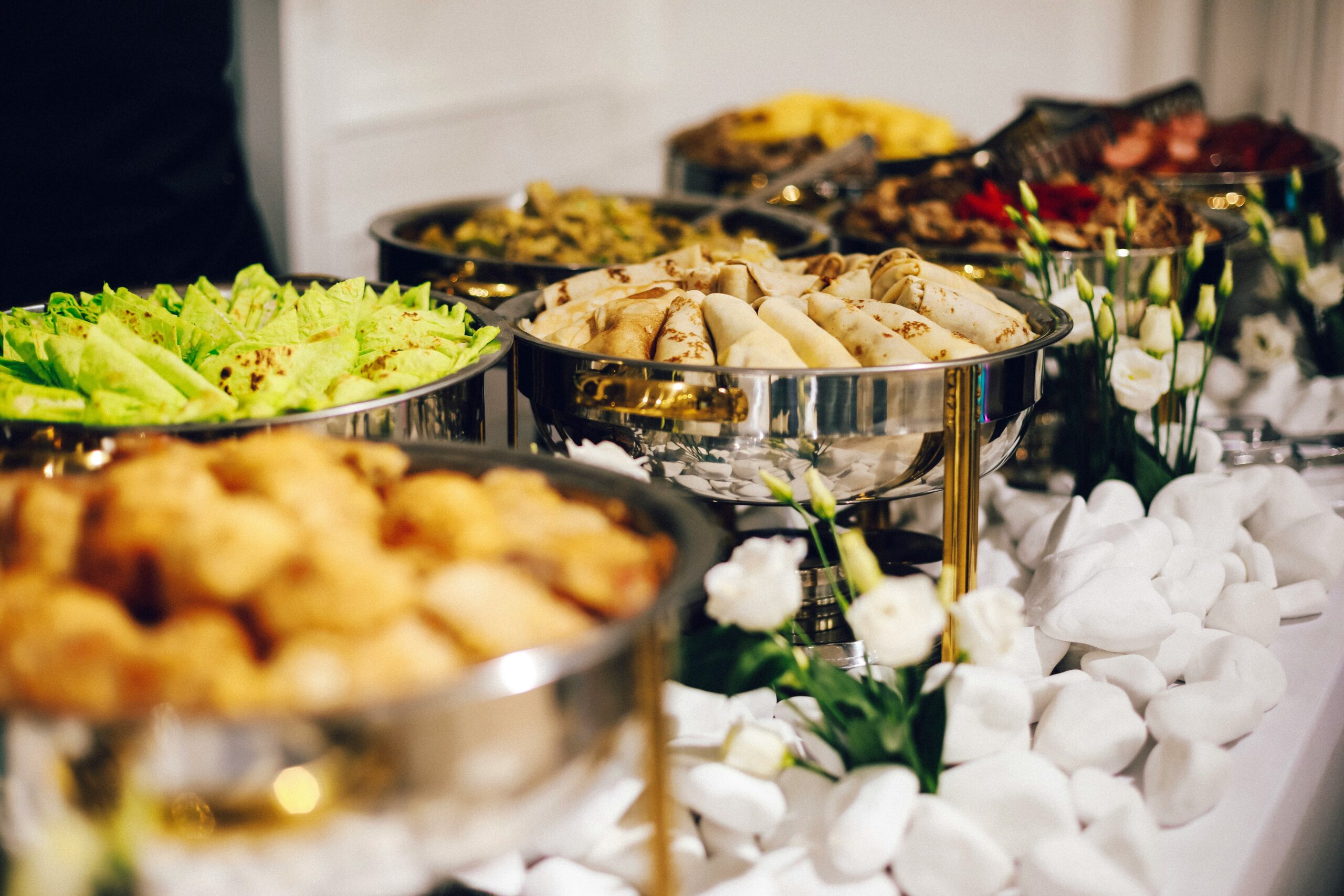
Farm to table catering is everywhere right now. Every caterer website uses the phrase. Every event planning blog mentions it. But very few people stop to explain what it actually means in a real kitchen on a real event day — and more importantly, how to tell the difference between a caterer who genuinely operates that way and one who just put it on their website.
This guide breaks down exactly what farm to table catering is, how it works, what it looks like on a menu, and what questions to ask before you trust anyone with your event.
1. What Farm to Table Catering Actually Means
Farm to table catering means the food served at your event was prepared from fresh, seasonal, and minimally processed ingredients — as close to their source as possible — rather than from premade, frozen, or commercially manufactured products.
The phrase originated in the restaurant industry in the 1970s as a pushback against the industrialization of food. A chef named Alice Waters at Chez Panisse in Berkeley, California is widely credited with bringing the farm to table philosophy into mainstream American dining by building her entire menu around what local farmers brought to her kitchen each morning.
In a catering context, farm to table means the caterer is making decisions about the menu based on what is genuinely fresh and in season at the time of your event — not what is cheapest to source year-round from a commercial distributor.
According to the National Restaurant Association, 72% of American diners say they are more likely to choose a food service provider that uses locally sourced and scratch-made ingredients. That preference exists because people can taste the difference even when they cannot always name it.
2. How Farm to Table Catering Works in a Real Kitchen
Understanding farm to table catering requires understanding what actually happens in the kitchen before any event begins. Most people only see the food at the table. The story starts much earlier.
A genuine farm to table catering operation begins with sourcing. The caterer identifies what is in season, what is locally available, and what is at peak quality right now. That information shapes the menu rather than the other way around. In a standard catering operation the menu is fixed year-round and ingredients are sourced to match it. In a farm to table operation the available ingredients partially inform what goes on the menu.
Preparation follows sourcing. Scratch-made food takes significantly more time and skill than reheated or pre-portioned catering. Pasta made by hand from flour and eggs takes hours. A slow-cooked sauce built from whole tomatoes and fresh herbs needs time that cannot be rushed. Bread baked fresh day-of requires a kitchen that starts early and plans precisely around service timing.
Here is what that difference looks like in practice:
| What Happens | Farm to Table Catering | Standard Catering |
|---|---|---|
| Ingredient sourcing | Fresh, seasonal, sourced close to event date | Pre-purchased from commercial distributor year-round |
| Pasta preparation | Made by hand from scratch day of event | Dried or pre-packaged, reheated before service |
| Sauce preparation | Slow-cooked from whole ingredients hours before service | Premade or from commercial concentrate |
| Bread | Baked fresh day of event | Frozen, thawed, and reheated |
| Vegetables | Seasonal, roasted fresh day of event | Pre-cut, often frozen or canned |
| Desserts | Made in-house from scratch | Premade from commercial supplier |
| Flavor result | Built over hours through genuine cooking | Assembled and reheated |
The time investment in a farm to table catering kitchen is significantly higher. That is reflected in the cost and in the food itself.

3. What a Farm to Table Catering Menu Looks Like
A genuine farm to table catering menu changes with the seasons. Not dramatically from week to week but meaningfully from season to season — because the ingredients that are genuinely at their best in June are not the same as the ingredients at their best in November.
According to research by the James Beard Foundation, menus built around seasonal ingredients produce measurably higher guest satisfaction scores than static year-round menus. The reason is simple: food at peak freshness has a flavor intensity that out-of-season or stored ingredients cannot replicate.
Here is what a seasonal farm to table catering menu looks like across the year for an Italian-focused operation:
| Season | Best Vegetables to Feature | Pasta and Grain Focus | Protein Options | Dessert Direction |
|---|---|---|---|---|
| Spring | Asparagus, peas, artichokes, spring onions | Light herb pasta, fresh egg pappardelle | Chicken masala with spring herbs, fish | Tiramisu, light fruit-based dolci |
| Summer | Zucchini, roasted peppers, eggplant, peak tomatoes | Rigatoni al forno with summer tomato sauce | Grilled proteins, chicken masala | Tiramisu, cannoli, fresh fruit |
| Fall | Roasted squash, mushrooms, root vegetables | Baked ziti, rich slow-cooked ragù pasta | Braised short rib, chicken masala | Classic tiramisu, spiced cannoli |
| Winter | Roasted root vegetables, caramelized onions, hearty greens | Deep winter ragù, hearty baked pastas | Slow-cooked braised proteins | Warm Italian sweets, tiramisu |
A caterer claiming farm to table credentials but offering the exact same menu in February as in August is a signal worth paying attention to.
4. Why Farm to Table Catering Near Me Matters for Local Events
There is a practical and an emotional reason why farm to table catering near you produces better results than sourcing from a large regional operation.
The practical reason is freshness. Ingredients sourced locally travel shorter distances and spend less time in transit. A tomato that came from 30 miles away and was picked two days ago is a fundamentally different ingredient than a tomato that traveled 1,400 miles over a week. Every dish built from that tomato reflects that difference.
The emotional reason is connection. Events are tied to places. A wedding in a small Pennsylvania town, a family reunion in a rural county, a graduation party in the neighborhood where someone grew up — these occasions carry the weight of where they happen. Food sourced and prepared by someone rooted in that same community adds a layer of authenticity that imported or industrial catering simply cannot replicate.
When you search for farm to table catering near me you are not just looking for a caterer who uses nice ingredients. You are looking for someone who understands your community, your region, and your season — and cooks accordingly.
5. Farm to Table Wedding Catering — What You Should Expect
Weddings are the highest-stakes catering event most people will ever plan. The food is not just sustenance — it is part of the experience guests carry with them long after the night ends.
According to a survey by The Knot, 75% of wedding guests say food quality is the single most memorable aspect of a reception — above the venue, the flowers, and the music. That statistic carries a specific implication for couples considering farm to table wedding catering: the investment in genuinely scratch-made, seasonal food returns more in guest memory than almost any other budget decision made for the event.
Here is what to expect from a legitimate farm to table wedding catering operation:
| What to Expect | What It Looks Like in Practice |
|---|---|
| Seasonal menu consultation | Caterer asks about your wedding date and builds menu around what will be freshest then |
| Tasting session | You eat the actual dishes before committing so there are no surprises on the day |
| Day-of scratch preparation | Food is made the morning of your wedding not the day before |
| Dietary accommodation | Gluten-free, vegetarian, and allergy needs built into the menu from the start |
| Service timing coordination | Caterer works around your ceremony and reception timeline not around their own convenience |
| Post-event cleanup | Full breakdown and cleanup included — you do not manage any of this yourself |
The difference between farm to table wedding catering and standard wedding catering is most noticeable in the details guests describe afterward. Standard catering gets described in categories — “the chicken was good.” Farm to table catering gets described specifically — “the pasta was handmade and the sauce had been cooking all day.” That specificity is the signature of food that was genuinely made.
6. How Much Does Farm to Table Catering Cost
Real ingredients cost more than industrial ones. Real labor costs more than reheating. Farm to table catering reflects those realities honestly and any caterer quoting farm to table pricing at commodity catering rates is worth questioning.
Full service farm to table catering typically runs between $60 and $150 per person in the United States depending on the region, the number of courses, the service format, and the event size. That range sits above standard catering pricing for a straightforward reason — the food takes more time and better ingredients to produce.
Here is what drives the cost of farm to table catering up or down:
| Cost Factor | What Lowers the Cost | What Raises the Cost |
|---|---|---|
| Guest count | Smaller events under 50 | Larger events over 100 |
| Course count | Focused 2 to 3 course menu | Full 5 to 6 course progression |
| Season | Summer and fall when produce is abundant | Winter when premium sourcing is required |
| Service format | Buffet or family style | Full plated dinner service |
| Menu complexity | Single protein, focused menu | Multiple proteins, specialty items, custom desserts |
| Booking lead time | Early booking on off-peak dates | Peak dates booked late |
The most useful question to ask when evaluating farm to table catering cost is not “why does this cost more” but “what am I actually getting for the difference.” A meal guests describe in specific detail weeks later is worth more than a meal they cannot remember by the next morning.
7. How to Tell if a Caterer Is Actually Farm to Table
This is the question most people forget to ask — and it is the most important one on the entire list.
Any caterer can put “farm to table” on their website. The phrase has no regulatory definition and no verification requirement. Here are the specific questions that reveal whether a caterer genuinely operates this way:
| Question to Ask | What a Genuine Answer Sounds Like |
|---|---|
| Do you make your pasta from scratch? | Yes, every batch is made by hand the morning of the event |
| Where do your seasonal vegetables come from? | We source from local and regional suppliers based on what is in season |
| Does your menu change across the seasons? | Yes, here is how our spring menu differs from our fall menu |
| Can we do a tasting before we commit? | Absolutely, we build tasting sessions into the planning process |
| What time does your team start cooking on event day? | We start well before the event — slow-cooked dishes need hours |
| Can you show us a menu from a recent event? | Yes, and here is how it reflected what was fresh at that time of year |
A caterer who answers those questions confidently and specifically is operating a genuine farm to table kitchen. A caterer who deflects, generalizes, or pivots quickly to pricing is telling you something important.
FAQ: Farm to Table Catering
What is farm to table catering?
Farm to table catering is a catering approach where food is prepared from fresh, seasonal, and locally sourced ingredients rather than premade, frozen, or commercially processed products. It means every dish is made from scratch using whole ingredients at peak freshness, with the menu reflecting what is genuinely in season at the time of the event. The term originated with chef Alice Waters at Chez Panisse in Berkeley in the 1970s and has since become the standard for quality-focused food service operations.
How much does farm to table catering cost per person?
Farm to table catering typically costs between $60 and $150 per person for full service depending on the region, number of courses, service format, and event size. The higher cost compared to standard catering reflects the genuine difference in ingredients and preparation time. Always request an itemized quote that separates food, labor, staffing, and any additional service fees so you understand exactly what you are paying for.
What questions should I ask a farm to table caterer?
Ask whether they make their pasta and bread from scratch, where they source their seasonal vegetables, how their menu changes across the seasons, and whether they offer a tasting session before you commit. Ask what time their team starts cooking on the day of your event — a genuine farm to table kitchen starts early because slow-cooked dishes cannot be rushed. If a caterer cannot answer these questions specifically, that is a meaningful signal about how they actually operate.
Is farm to table catering worth it for weddings?
Yes. According to a survey by The Knot, 75% of wedding guests say food quality is the most memorable aspect of a reception. Farm to table wedding catering produces food that guests describe in specific detail — the handmade pasta, the slow-cooked sauce, the bread that was still warm. That level of guest memory is the clearest measure of whether a catering investment was worth making.
How do I find farm to table catering near me?
Search for local Italian or farm-focused caterers in your area and ask them directly whether they scratch-make their food, source seasonally, and offer tasting sessions. Check reviews for specific food descriptions — guests who ate genuinely scratch-made food describe it differently than guests who ate reheated catering. Proximity matters for freshness so prioritize caterers who are based in your region rather than larger operations serving a wide geographic area.
Looking for Farm to Table Catering in Bradford PA?
If you are planning an event in Bradford, McKean County, or the surrounding region and you want food that was genuinely made from scratch with seasonal ingredients, Curcio’s Italian Catering is worth a conversation. Shawn builds every menu around what is fresh, makes every dish from scratch the morning of your event, and handles everything from the first consultation through the final cleanup.
Leave a Reply